Chapter I · Before the hammer · 1360–1696
Before the piano: organ, clavichord and harpsichord
Organs, clavichords and harpsichords: keys that could not whisper.
Painting: Clive Douglas, Hartz
Every section is read aloud: press Listen. Or hear the whole chapter in the app, where you can tick off each part as you go.
In this chapter: c. 1360 The oldest keyboard music · 1397 The harpsichord · c. 1404 The clavichord · 1591 William Byrd · c. 1680 Pachelbel · 1696 Henry Purcell
c. 1360
The oldest keyboard music
A page from an English abbey
Our story starts with a scrap of parchment. Around 1360, someone in England wrote down a handful of dances for a keyboard, on two leaves that were later bound into the records of Robertsbridge Abbey. It is the oldest keyboard music anyone has ever found. The instrument it was written for was probably an organ: pipes, bellows, and a row of keys. Organs could be loud and glorious, but pressing a key harder did nothing. A key was either open or closed, sound or silence. Hold on to that idea. It is the problem this whole story is about.
1397
The harpsichord
A quill that plucks the string
In 1397 a lawyer in Padua wrote that a man named Hermann Poll claimed to have invented an instrument called the clavicembalum. We know it as the harpsichord. Press a key, and a thin strip of wood called a jack jumps up, and a quill on it plucks the string, like a fingernail on a guitar. It rings bright and clear, and for three hundred years it was the keyboard of palaces, churches and theatres. But the quill plucks the same way however you press. Touch a key gently or strike it with all your strength, and the note comes out exactly the same. Players found clever ways around it, with a second keyboard and extra sets of strings. They could change the colour. They could never make one note softer than the next.
c. 1404
The clavichord
The quietest instrument in the house
Around 1404 a German poem mentions a clavichord. It is a simple box of strings. When you press a key, a small brass blade called a tangent pushes up into the string and stays there for as long as you hold it. Because your finger is touching the string through the key, you can play softly or a little louder, and even rock your finger to make the note tremble, a kind of vibrato. It was so quiet you could practise at night without waking the house, and for centuries musicians loved it in private. Bach's son would call it the most expressive keyboard of all. It had the feeling. It just did not have the voice to fill a room.
How it links: C. P. E. Bach (1753)
1591
William Byrd
Music for a lady’s book
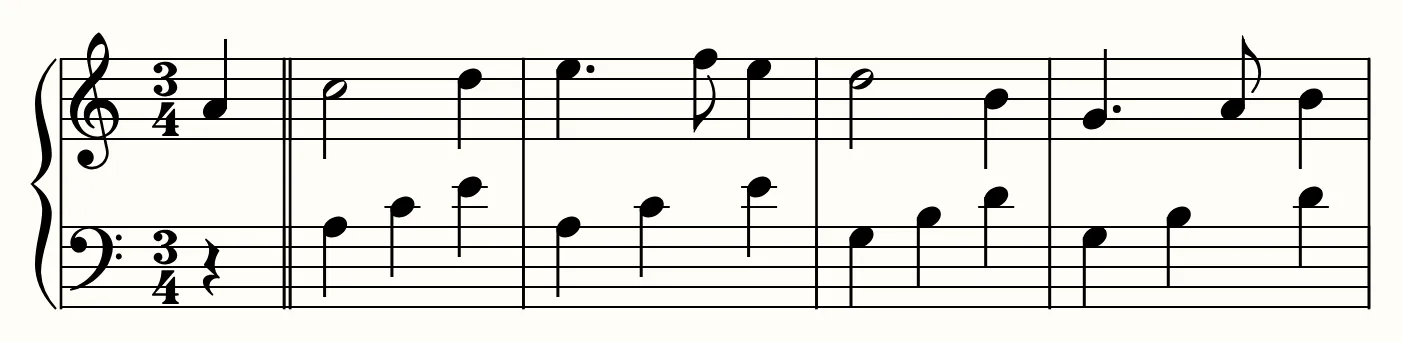
In 1591 a scribe finished copying forty-two keyboard pieces by William Byrd into a beautiful book for a lady named Nevell. Byrd was a Catholic in Protestant England, where his faith could cost him everything, yet Queen Elizabeth kept him in her royal chapel, because his music was too good to lose. His keyboard pieces were played on the virginals, a small harpsichord in a box that sat on a table. There are dances, sets of variations, even a piece that imitates church bells. Tunes everybody knew, like Greensleeves, were sung, strummed and endlessly varied. This is where music written for keys alone, not copied from voices, really begins to flower.
c. 1680
Pachelbel
Eight notes, round and round
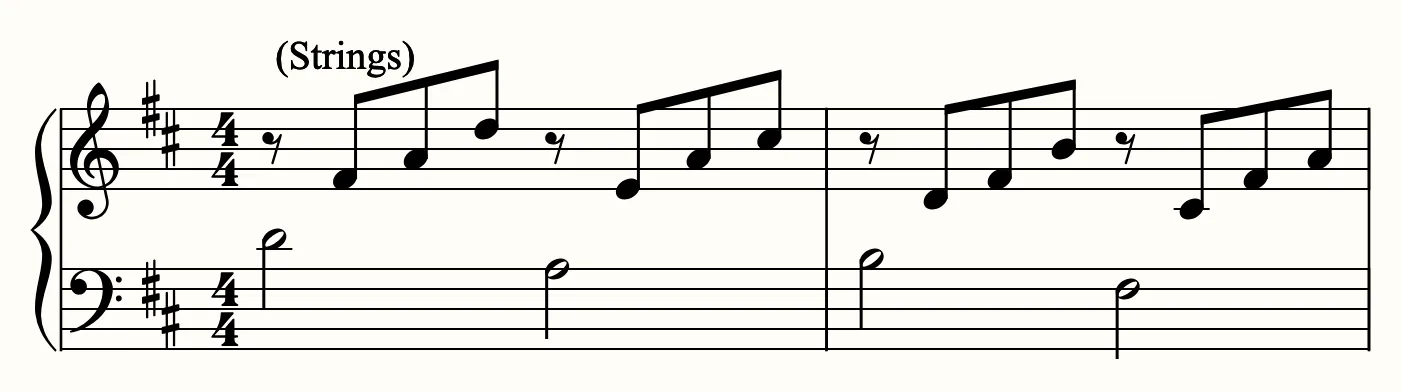
Somewhere around 1680, a German organist called Johann Pachelbel wrote a canon for three violins over a bass line of eight notes that repeats again and again. Pachelbel was a much-loved teacher. One of his pupils was Johann Christoph Bach, and when that young man's parents died, he took in his nine-year-old brother, Johann Sebastian, and taught him the keyboard. So the greatest keyboard composer of all learned in a line that runs back to Pachelbel. The canon itself was forgotten for nearly three hundred years. Rediscovered in the twentieth century, it became the sound of weddings everywhere, and its chords run underneath hundreds of pop songs.
How it links: Bach, in every key (1722)
1696 · Henry Purcell, 1659–1695
Henry Purcell
A widow’s gift to students
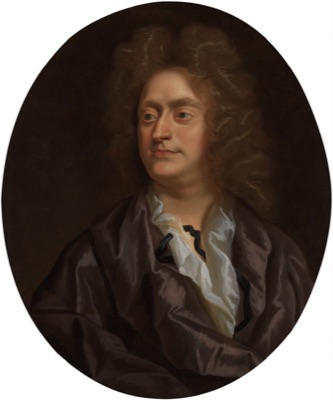
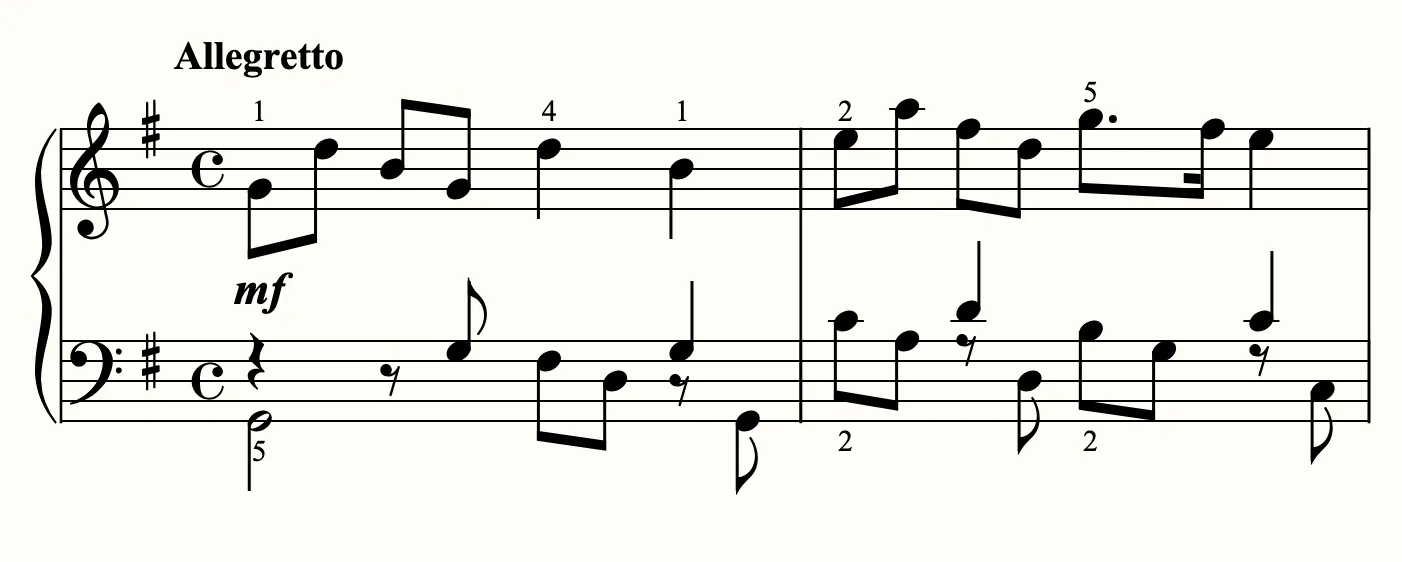
Henry Purcell was the greatest English composer of his age, organist at Westminster Abbey, writing for kings and for the theatre. He died in 1695, at only thirty-six. The next year his widow, Frances, gathered his harpsichord lessons into a book, so that students could keep learning from him. These are short, graceful pieces: airs, hornpipes and dances, written for players at home. Listen to how much singing Purcell finds in a string that is only plucked. At that very moment, in a palace in Florence, a quiet craftsman was working on an instrument that would let that singing breathe.
How it links: Cristofori’s piano (1700)
Test yourself
What could a harpsichord never do?
- Play more than one note at a time
- Make a note softer or louder by how you press
- Play in more than one key
Show the answer
Make a note softer or louder by how you press. Its quill plucks the string the same way however you press. The clavichord could, but it was far too quiet for a hall.
In the app
The story of the piano lives in Artform’s Theory room: twelve chapters on a road through the years, each one read aloud, with the pieces to play and a tick for every part you finish. Free, in the browser.
Hear chapter I in the app