Chapter III · The new keyboard of Europe · 1753–1795
Mozart, Haydn and the classical piano
Bach’s sons, Mozart’s Vienna, and a duel on Christmas Eve.
Painting: Clive Douglas, High country
Every section is read aloud: press Listen. Or hear the whole chapter in the app, where you can tick off each part as you go.
In this chapter: 1753 C. P. E. Bach · 1768 A piano for every home · 1777 Mozart meets Stein · 1781 The duel · 1783 Mozart’s Vienna · 1794 Haydn in London
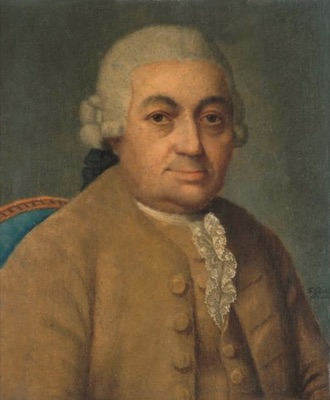
1753 · Carl Philipp Emanuel Bach, 1714–1788
C. P. E. Bach
The son who taught the world to feel at the keys
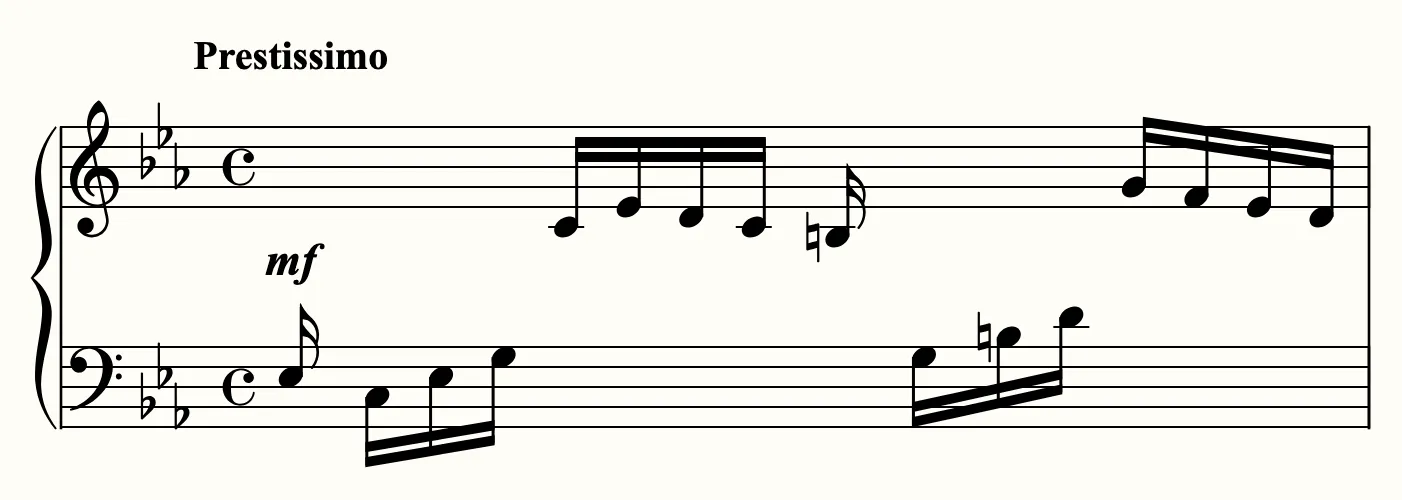
Carl Philipp Emanuel was Bach's second son, and for most of the eighteenth century he was the famous Bach. He played the harpsichord for Frederick the Great for almost thirty years, but his heart belonged to the clavichord, where a player's feelings reach the string directly. In 1753 he wrote a book on the true art of playing keyboard instruments. In it he says a musician cannot move others unless he is moved himself. Haydn played his sonatas over and over until he knew them by heart. Mozart is supposed to have said: he is the father, and we are the children. His little Solfeggietto is one restless line racing up and down the keys.
How it links: Bach and the king (1747) · Haydn in London (1794)
1768
A piano for every home
A piano on the kitchen table
When war swept through Saxony in the 1750s, German instrument makers fled to London. One of them, Johannes Zumpe, began making small, cheap pianos shaped like a box on legs: the square piano. Suddenly families who could never afford a harpsichord could own a keyboard. In 1768, Johann Christian Bach, the youngest son of Sebastian, now music master to the Queen of England, played a solo on one at a public concert, one of the first times London heard the piano on its own. A few years earlier he had befriended a visiting eight-year-old called Mozart. They played a sonata together, the little boy on his knee, taking turns bar by bar. Mozart loved him all his life.
How it links: Mozart meets Stein (1777)
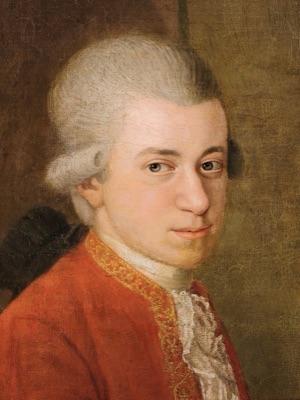
1777 · Wolfgang Amadeus Mozart, 1756–1791
Mozart meets Stein
A letter to his father
In October 1777, Wolfgang Amadeus Mozart, twenty-one and looking for work, stopped in Augsburg and tried the pianos of Johann Andreas Stein. He wrote to his father in delight: however hard he struck, the hammer fell away at once, nothing jangled, and the tone stopped the instant he lifted his finger. This was the Viennese piano: light, quick and clear, perfect for music where every note speaks like a word. But that journey would break his heart. His mother, travelling with him, fell ill in Paris the next summer and died there, far from home. Mozart had to break the news to his father.
How it links: A piano for every home (1768) · The duel (1781)
1781
The duel
Christmas Eve, 1781
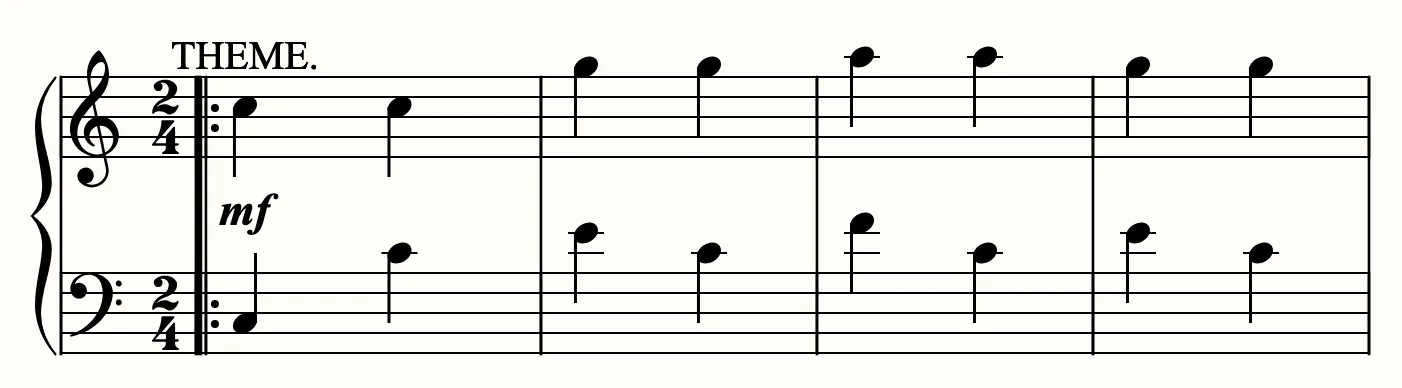
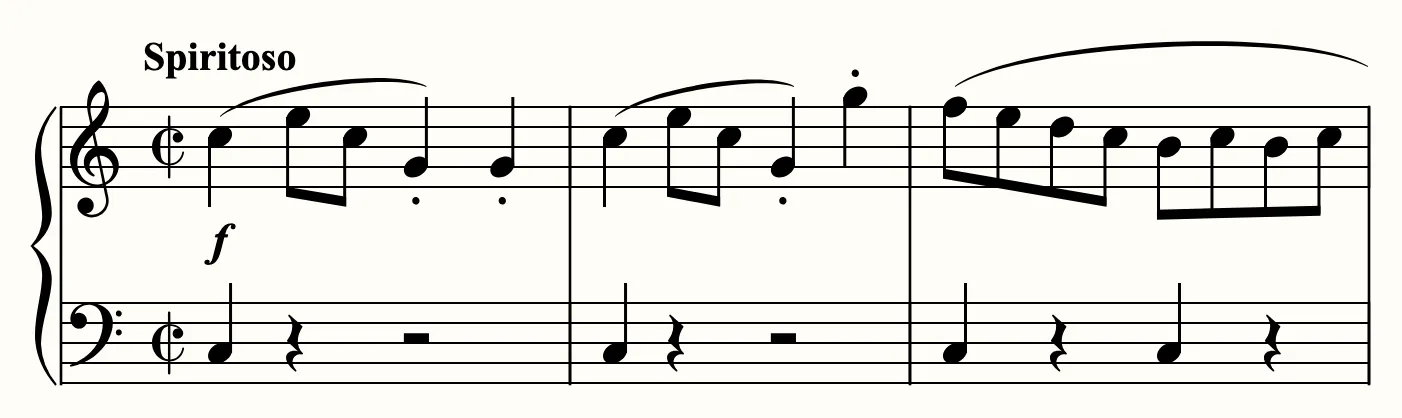
On Christmas Eve 1781, the Emperor Joseph the Second staged a contest in his palace in Vienna: Mozart against Muzio Clementi, an Italian virtuoso who lived in London. They improvised, played their own sonatas, and read music together at sight. The Emperor is said to have called it a draw. Mozart wrote to his father that Clementi was a mere mechanic, with no taste or feeling. Clementi was kinder. He said he had never heard anyone play with so much spirit and grace. Clementi went on to become a great teacher and a maker of pianos in London, and his Sonatinas are still among the first real pieces a pianist learns.
How it links: Mozart meets Stein (1777) · The first nocturne (1812)
1783 · Wolfgang Amadeus Mozart, 1756–1791
Mozart’s Vienna
A piano carried through the streets
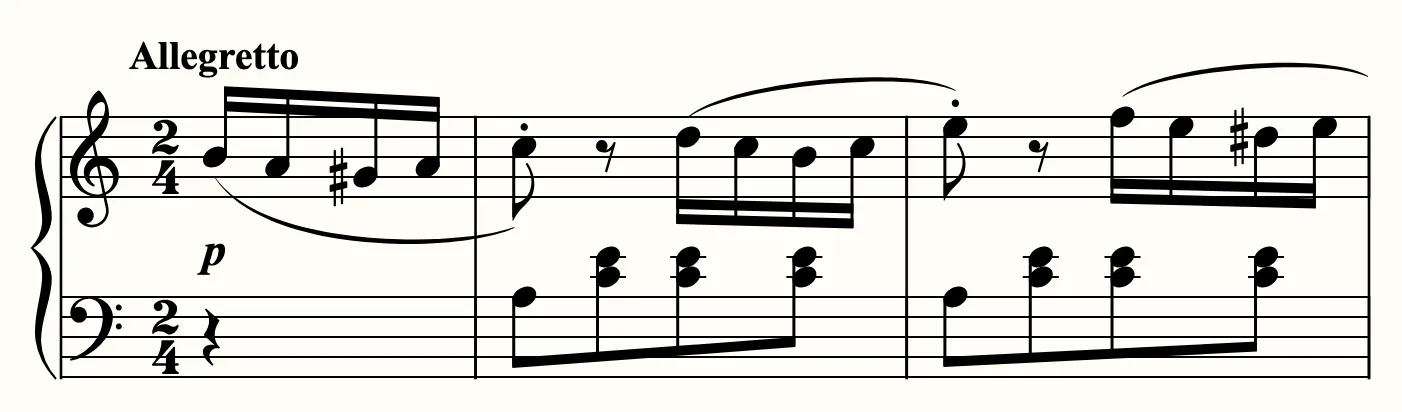
Mozart settled in Vienna, married Constanze against his father's wishes, and lived as a freelance musician, one of the first great composers to try. He bought a fine piano by Anton Walter and had it carried through the streets to his concerts. Around 1783 he wrote a sonata that ends with a march in the Turkish style, imitating the drums and cymbals of the Ottoman military bands that fascinated Vienna. Five years later, short of money, he wrote a little sonata in C and listed it as for beginners. It is now one of the most played pieces in the world. He died in 1791, aged thirty-five, with his Requiem unfinished on his desk.
How it links: Haydn in London (1794)
1794 · Joseph Haydn, 1732–1809
Haydn in London
A servant set free
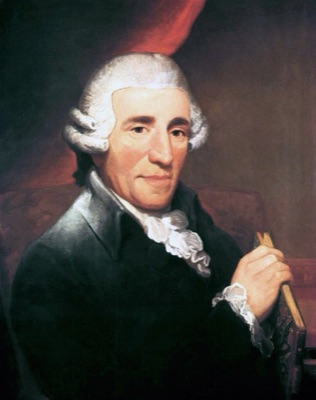
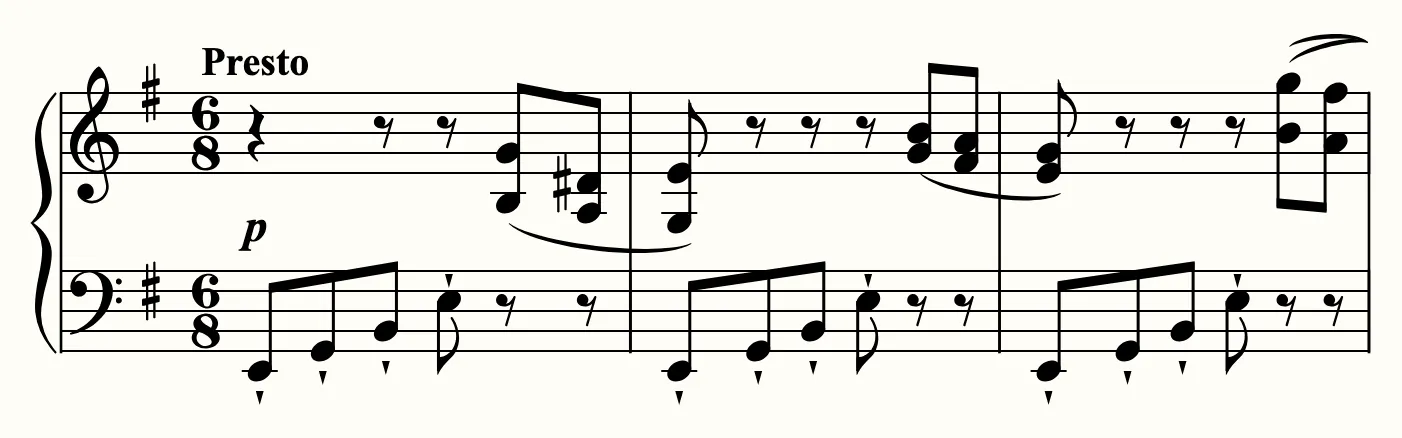
For almost thirty years Joseph Haydn was a servant in uniform, writing music for the Esterházy princes on their remote estate. When the prince died in 1790, Haydn, nearly sixty, was free to travel at last. In London he was a celebrity. There he met the English pianos of John Broadwood: heavier and richer than the Viennese ones, with pedals worked by the feet. For them he wrote his last sonatas, and in one of them he wrote open pedal over the music, one of the first pedal markings ever written. Haydn and Mozart had been dear friends, and Mozart called him his model. When Mozart died, Haydn wrote that the world would not see such a talent again in a hundred years.
How it links: Mozart’s Vienna (1783) · Beethoven (1792)
Test yourself
Who did Mozart face in a keyboard duel on Christmas Eve 1781?
- Joseph Haydn
- Muzio Clementi
- Johann Christian Bach
Show the answer
Muzio Clementi. Muzio Clementi, who later made pianos in London and wrote the Sonatinas so many pianists still learn.
In the app
The story of the piano lives in Artform’s Theory room: twelve chapters on a road through the years, each one read aloud, with the pieces to play and a tick for every part you finish. Free, in the browser.
Hear chapter III in the app