Chapter II · Soft and loud · 1700–1747
Who invented the piano?
A Florentine invention, and the last great harpsichord masters.
Painting: Clive Douglas, Blue Mountains, dawn
Every section is read aloud: press Listen. Or hear the whole chapter in the app, where you can tick off each part as you go.
In this chapter: 1700 Cristofori’s piano · 1711 The drawing that travelled · 1716 Couperin · 1720 Handel · 1722 Bach, in every key · 1732 The first piano music · 1738 Scarlatti · 1747 Bach and the king
1700
Cristofori’s piano
A hammer that knows when to let go
In 1700, a list of the Medici family's instruments in Florence includes something new: an instrument by Bartolomeo Cristofori, of new invention, that plays soft and loud. Cristofori looked after the instruments of Prince Ferdinando de' Medici, a quiet craftsman from Padua. His idea sounds simple. Instead of plucking the string, strike it with a small hammer covered in leather. But a hammer that stays on the string kills the sound. So he invented the escapement: the hammer flies up, strikes, and falls straight back, leaving the string free to ring. Press gently and the note is soft. Press firmly and it is loud. In Italian, soft is piano, and loud is forte. The instrument would be named after exactly that.
How it links: The drawing that travelled (1711) · The first piano music (1732)
1711
The drawing that travelled
A secret goes into print
For years almost nobody outside Florence knew about Cristofori's instrument. Then in 1711 a writer named Scipione Maffei published an article about it, with a careful drawing of the hammer mechanism. He admitted that some musicians found its tone too soft and dull. Others were already enchanted. In 1725 the article was translated into German, and it found its way to an organ builder in Saxony called Gottfried Silbermann, who began to build pianos of his own. Inventions often travel like this: not as instruments, but as drawings, carried by curious people to someone who can build them.
How it links: Bach and the king (1747)
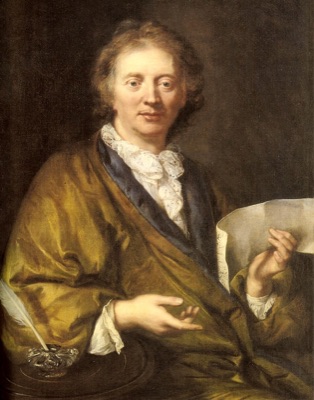
1716 · François Couperin, 1668–1733
Couperin
The art of touching the harpsichord
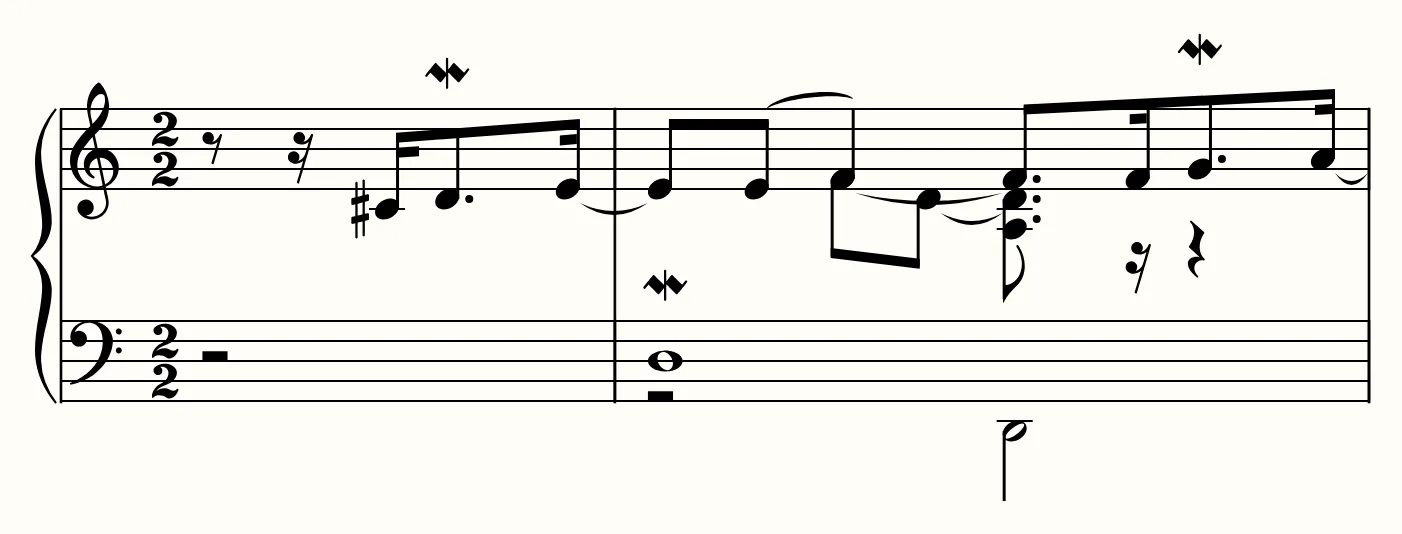
In France, the harpsichord was treated like a poet. François Couperin, organist to King Louis the Fourteenth, gave his pieces names like little portraits: The Mysterious Barricades, The Little Windmills. In 1716 he published a book called The Art of Touching the Harpsichord, about how to make a plucked string seem to sing: where to put each finger, how to hold one note a breath longer than the next. A few years later Jean-Philippe Rameau, who would become France's great composer of opera, wrote a piece called The Hen, in which the harpsichord clucks and scratches. The French made the keyboard speak in pictures, and the piano would inherit that idea.
How it links: Bach, in every key (1722)
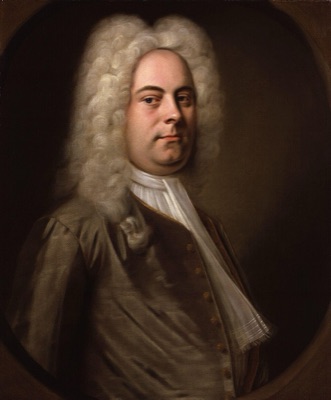
1720 · George Frideric Handel, 1685–1759
Handel
The other giant, born the same year
Handel and Bach were born in the same year, 1685, in towns a few days' ride apart. Bach tried to meet him twice and missed him both times. Bach stayed in Germany. Handel went to London and became a star, writing Italian operas for the English. In 1720 he published eight great suites for the harpsichord. One of them ends with a passacaglia, variations over a bass that keeps returning, with all the drama of a man who wrote for the stage. Handel lost fortunes more than once, when his opera companies failed, and each time he picked himself up and reinvented himself. That restless confidence is in his keyboard music: big gestures, on an instrument that still could not get louder.
How it links: Bach, in every key (1722)
1722 · Johann Sebastian Bach, 1685–1750
Bach, in every key
Twenty-four keys, and a family to feed
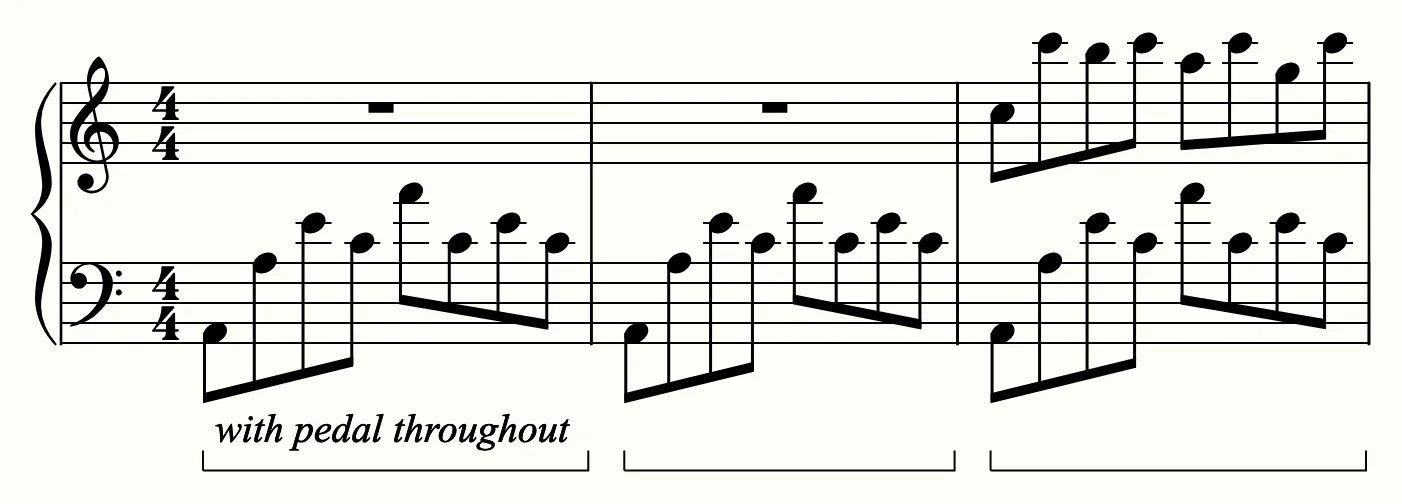
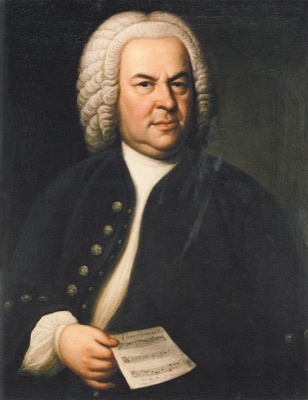
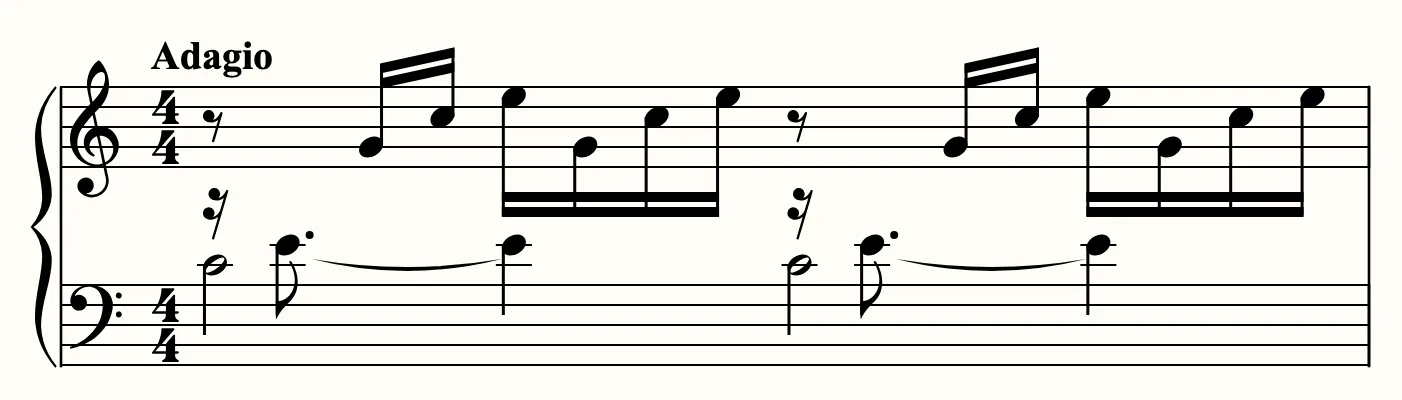
Johann Sebastian Bach was orphaned at nine and raised by his older brother. In 1720, while he was away travelling with his prince, his wife Maria Barbara fell ill and died; he came home to find her already buried. He was left with four young children. Two years later he finished a book of preludes and fugues, one in every major and minor key, for the use and profit of young musicians. He called it The Well-Tempered Clavier. Clavier simply means keyboard. Well-tempered means tuned so that every key sounds good, something keyboards could not take for granted. The first prelude, in C major, is one pattern of broken chords, rising and falling like breathing. It is one of the first pieces nearly every pianist learns, and Bach wrote it for the harpsichord and the clavichord.
How it links: Pachelbel (c. 1680) · Felix and Fanny (1829) · Glenn Gould (1955)
1732
The first piano music
Twelve sonatas for soft and loud
In 1732, in Florence, Lodovico Giustini published twelve sonatas for the harpsichord of soft and loud, commonly called the one with little hammers. They are the first music we know of written specifically for the piano, and Giustini filled them with markings a harpsichord player could only dream of: soft, loud, softer, louder. He dedicated them to a prince of Portugal. The royal courts of Portugal and Spain had fallen for Cristofori's instruments, and that brings us to a harpsichord genius who worked for a queen.
How it links: Cristofori’s piano (1700) · Scarlatti (1738)
1738 · Domenico Scarlatti, 1685–1757
Scarlatti
Five hundred and fifty-five sonatas for a queen
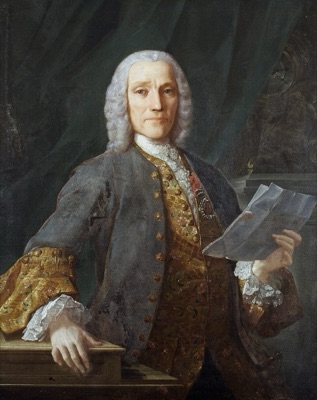
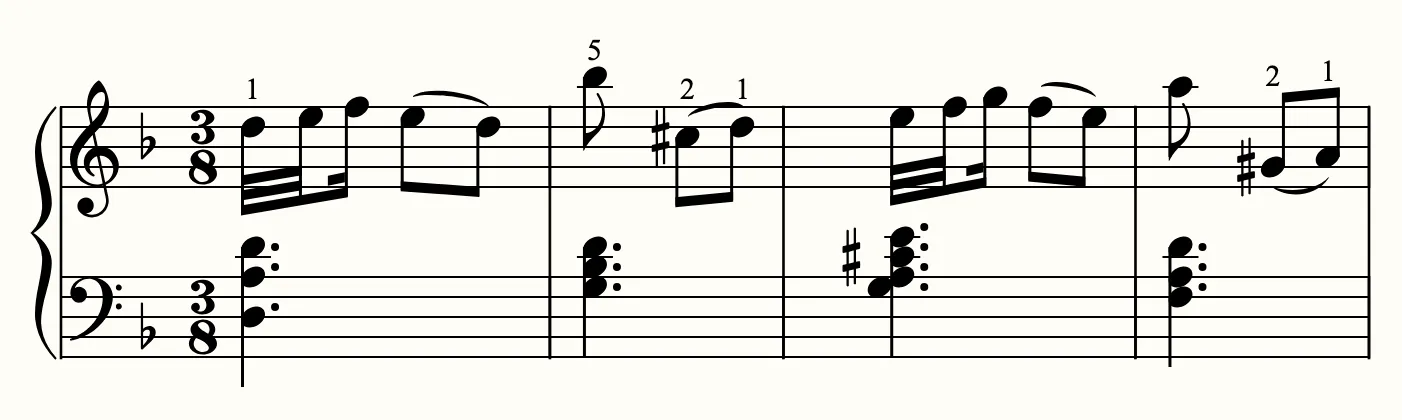
Domenico Scarlatti, also born in 1685, was the son of a famous opera composer. He spent most of his life as music teacher to Maria Barbara, a Portuguese princess who became Queen of Spain. For her he wrote five hundred and fifty-five short sonatas, each one a burst of colour: Spanish guitars, stamping feet, hands crossing over each other, notes repeated so fast they sound like mandolins. In 1738 he published thirty of them and told the player not to expect deep learning, only an ingenious game, and to enjoy them. The queen owned several of the new Florentine pianos, so Scarlatti may have been one of the very first composers to hear his music on a piano.
How it links: The first piano music (1732)
1747 · Johann Sebastian Bach, 1685–1750
Bach and the king
An old man, a young king, and a theme
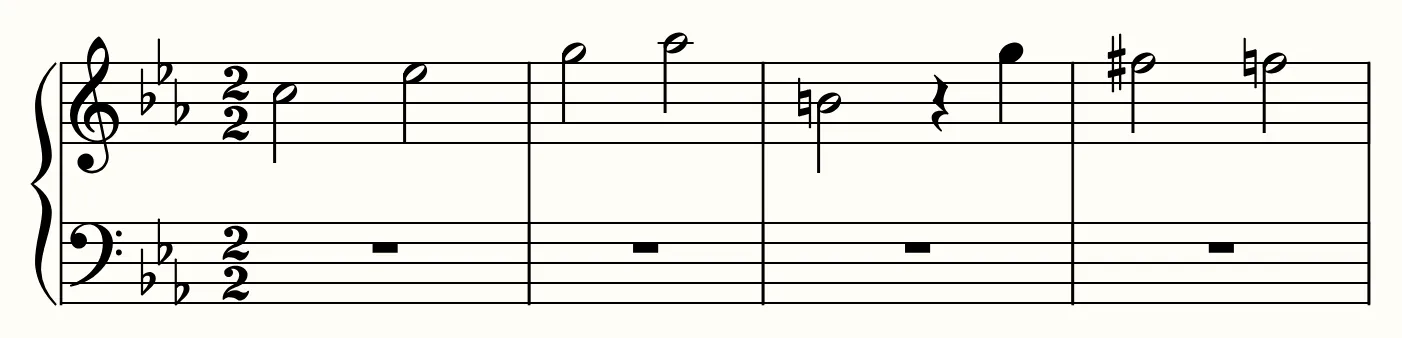
Silbermann showed one of his first pianos to Bach in the 1730s. Bach praised the tone, but said the keys were too heavy and the top notes too weak. Silbermann was offended, and went back to work for years. In May 1747, Bach, now sixty-two, travelled to Potsdam to visit his son Carl Philipp Emanuel, who played for Frederick the Great. The king owned several of Silbermann's improved pianos. He led Bach from one to the next, then played him a theme and asked for a fugue on it. Bach improvised one on the spot. At home he wrote it all down and sent it to the king as The Musical Offering. The story goes that this time, Bach approved of the pianos.
How it links: The drawing that travelled (1711) · C. P. E. Bach (1753)
Test yourself
What did Cristofori invent so the hammer would not muffle the string?
- A leather quill
- The escapement
- The sustain pedal
Show the answer
The escapement. The escapement lets the hammer strike and fall straight back, leaving the string free to ring.
In the app
The story of the piano lives in Artform’s Theory room: twelve chapters on a road through the years, each one read aloud, with the pieces to play and a tick for every part you finish. Free, in the browser.
Hear chapter II in the app