Chapter VI · Poets and virtuosos · 1838–1849
Chopin, Liszt, and Robert and Clara Schumann
Robert and Clara, Liszt’s fireworks, and Chopin’s last years.
Painting: Clive Douglas, Cliff at sunset
Every section is read aloud: press Listen. Or hear the whole chapter in the app, where you can tick off each part as you go.
In this chapter: 1838 Robert and Clara · 1840 Liszt · 1849 Chopin’s heart
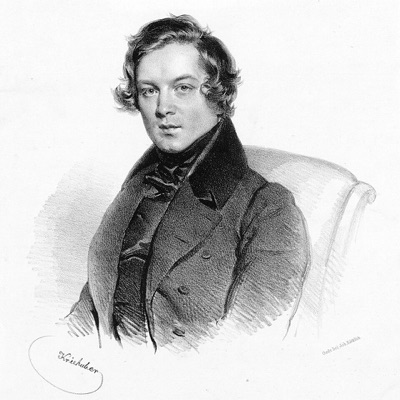
1838 · Robert Schumann, 1810–1856
Robert and Clara
Scenes from childhood
Robert Schumann wanted to be a great pianist until he damaged a finger, perhaps with a device he built to strengthen it. So he wrote instead: music, and words about music. In his first article he greeted the young Chopin with the line, hats off, gentlemen, a genius. He fell in love with Clara Wieck, his teacher's daughter, a prodigy who had published her first pieces at eleven. Her father forbade the marriage, and they fought him in court. In 1838, kept apart and longing, Robert wrote thirteen little Scenes from Childhood. The seventh, Träumerei, dreaming, is one of the gentlest pieces ever written. They married in 1840, and Clara became one of the great pianists of the century.
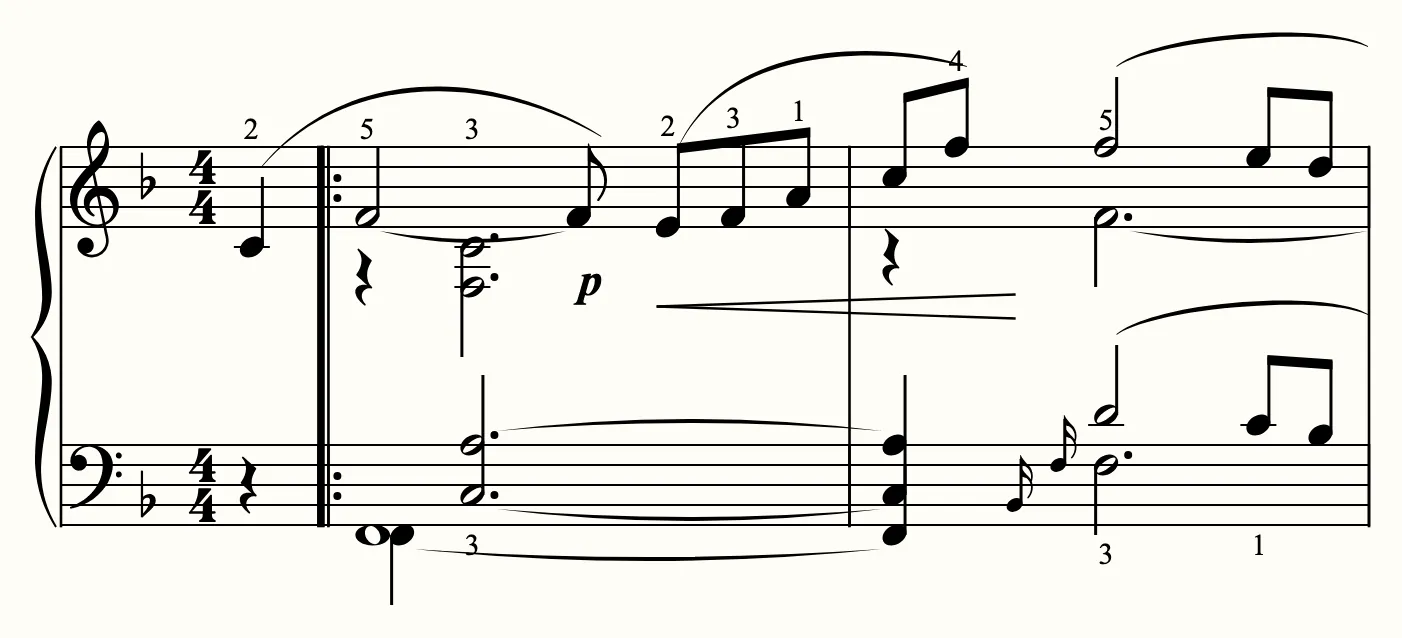
How it links: Chopin leaves home (1831) · Brahms (1868)
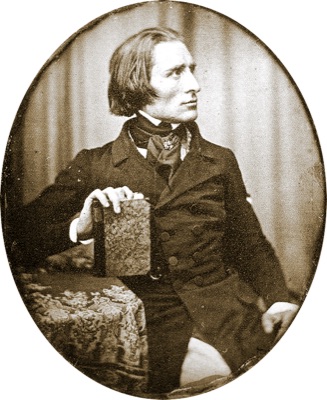
1840 · Franz Liszt, 1811–1886
Liszt
The first piano superstar
As a young man Franz Liszt heard the violinist Paganini and swore to do on the piano what Paganini did on the violin. He practised for hours a day until nothing seemed impossible. In 1840, in London, his concerts were advertised as recitals, and the word stuck: one person, one piano, a whole evening. He played from memory and turned the piano sideways so the audience could see his face. Crowds fought over his gloves; a poet called it Lisztomania. Yet the showman was famously generous. He taught hundreds of students without charging, raised money for Beethoven's monument, and championed young composers all his life. La Campanella is a little bell ringing through some of the most dangerous leaps in all piano music.
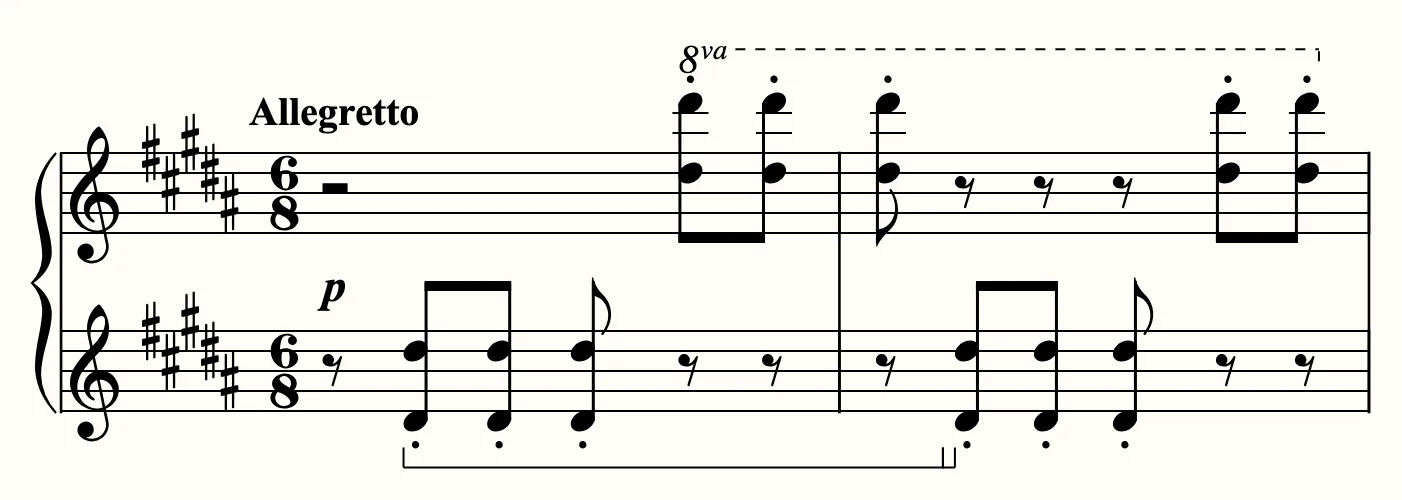
How it links: The double escapement (1821) · Beethoven (1792) · Grieg (1867)
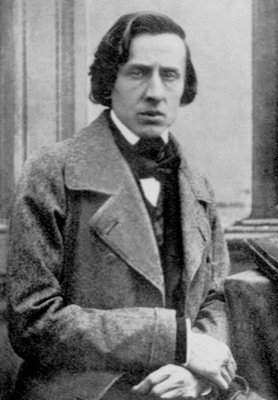
1849 · Frédéric Chopin, 1810–1849
Chopin’s heart
His heart went home
Chopin was ill for most of his short life, probably with tuberculosis. For nine years he lived with the novelist George Sand, writing much of his finest music in summers at her house in the country. In a cold, damp monastery on Majorca, in the winter of 1838, he finished his twenty-four Preludes. The one in E minor, sinking a semitone at a time, was played at his funeral. He died in Paris in 1849, aged thirty-nine. His body lies in Paris, but, as he had asked, his sister carried his heart back to Warsaw, where it rests in a church pillar to this day. He asked, too, that his unpublished pieces be destroyed. His friends published the Fantaisie-Impromptu anyway.
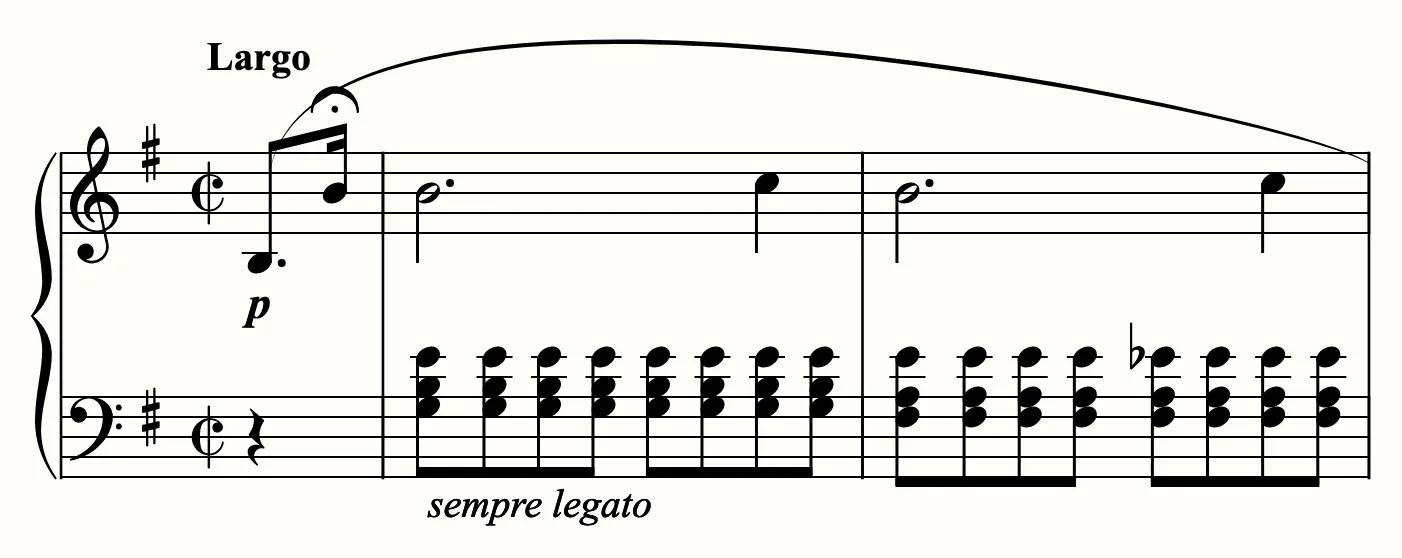
How it links: Chopin leaves home (1831)
Test yourself
What word was first used for Liszt’s concerts in London in 1840?
- Recital
- Nocturne
- Rhapsody
Show the answer
Recital. One person, one piano, a whole evening: the recital.
In the app
The story of the piano lives in Artform’s Theory room: twelve chapters on a road through the years, each one read aloud, with the pieces to play and a tick for every part you finish. Free, in the browser.
Hear chapter VI in the app