Chapter IX · A new colour · 1888–1899
A new colour: Satie, Debussy, Rachmaninoff, Ravel and Joplin
Satie, Debussy, Rachmaninoff, Ravel and the King of Ragtime.
Painting: Clive Douglas, Pittwater
Every section is read aloud: press Listen. Or hear the whole chapter in the app, where you can tick off each part as you go.
In this chapter: 1888 Satie · 1890 Debussy · 1892 Rachmaninoff · 1899 Ravel · 1899 Joplin
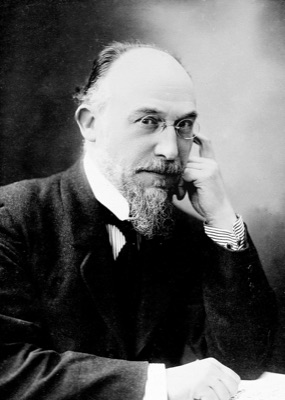
1888 · Erik Satie, 1866–1925
Satie
The outsider of Montmartre
Erik Satie played the piano in the cabarets of Montmartre for a living, later wore seven identical grey velvet suits, and wrote jokes into his music, with instructions to the player that make no sense at all. In 1888, at twenty-one, he wrote three Gymnopédies: slow, plain, strange pieces, a melody drifting over two swaying chords. In an age of enormous, dramatic music, they were almost nothing, and almost nobody noticed. He died poor in 1925. In his room, which no one else had entered for years, his friends found two pianos stacked one on top of the other, and a pile of letters he had never opened. Today the first Gymnopédie is one of the most played piano pieces on earth.
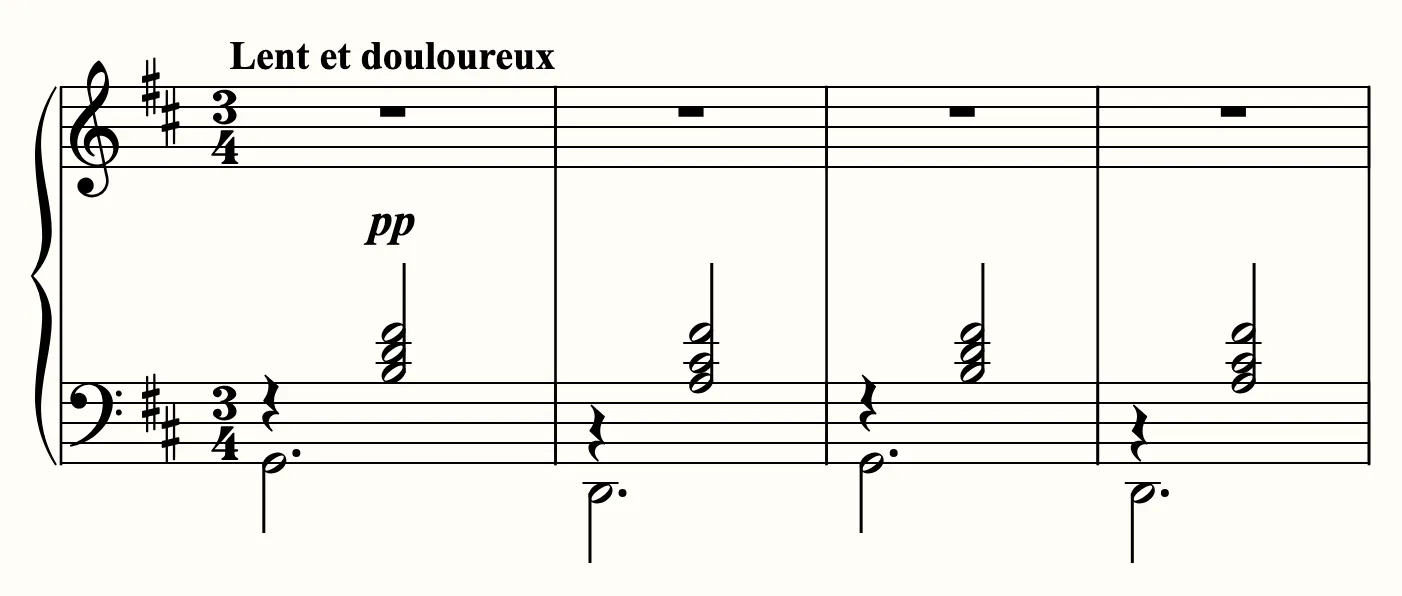
How it links: Debussy (1890) · Minimalism (1988)
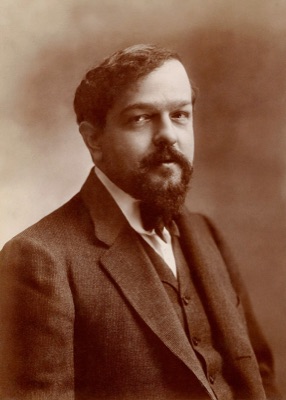
1890 · Claude Debussy, 1862–1918
Debussy
Make us forget the hammers
At the Paris World's Fair of 1889, Claude Debussy heard a gamelan orchestra from Java, gongs and metal keys shimmering in layers, and he never heard music the same way again. He wanted the piano to sound as if it had no hammers at all, chords floating like colours instead of marching somewhere. Clair de lune, moonlight, takes its name from a poem by Verlaine about masked dancers who are almost, but not quite, sad. He began it around 1890 and kept it back for fifteen years, revising, before he let it be published. Debussy and Satie were close friends for twenty-five years, two very different men who both wanted music to breathe.
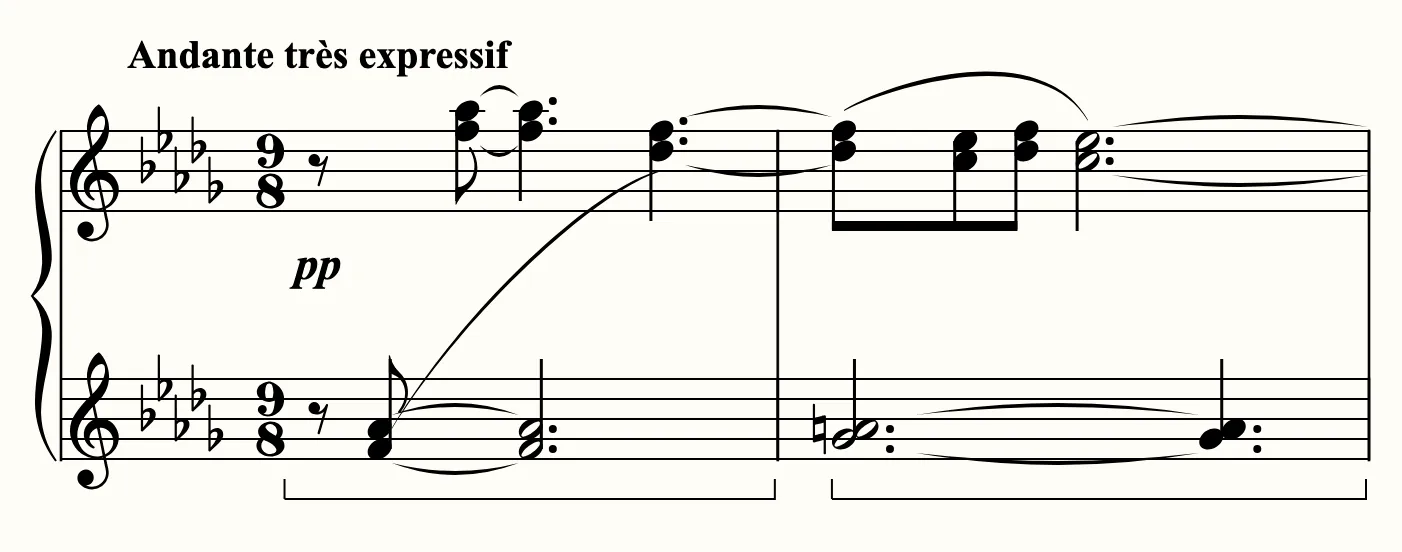
How it links: Satie (1888) · Jazz piano (1959)
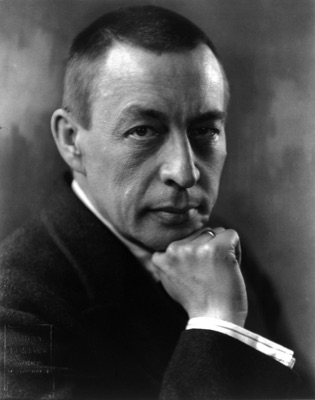
1892 · Sergei Rachmaninoff, 1873–1943
Rachmaninoff
The prelude that followed him everywhere
Sergei Rachmaninoff wrote his Prelude in C sharp minor at nineteen and sold it for a tiny fee. It became so famous that audiences shouted for it at every concert for the rest of his life; he called it simply It. Then came disaster. In 1897 his First Symphony was a catastrophe at its premiere, and he fell into a depression so deep he could hardly compose for three years. A doctor, Nikolai Dahl, helped him recover, and Rachmaninoff dedicated his Second Piano Concerto to him. He had enormous hands that could stretch more than an octave and a half. After the Russian Revolution he left his homeland forever, and spent the rest of his life touring as one of the greatest pianists who ever lived.
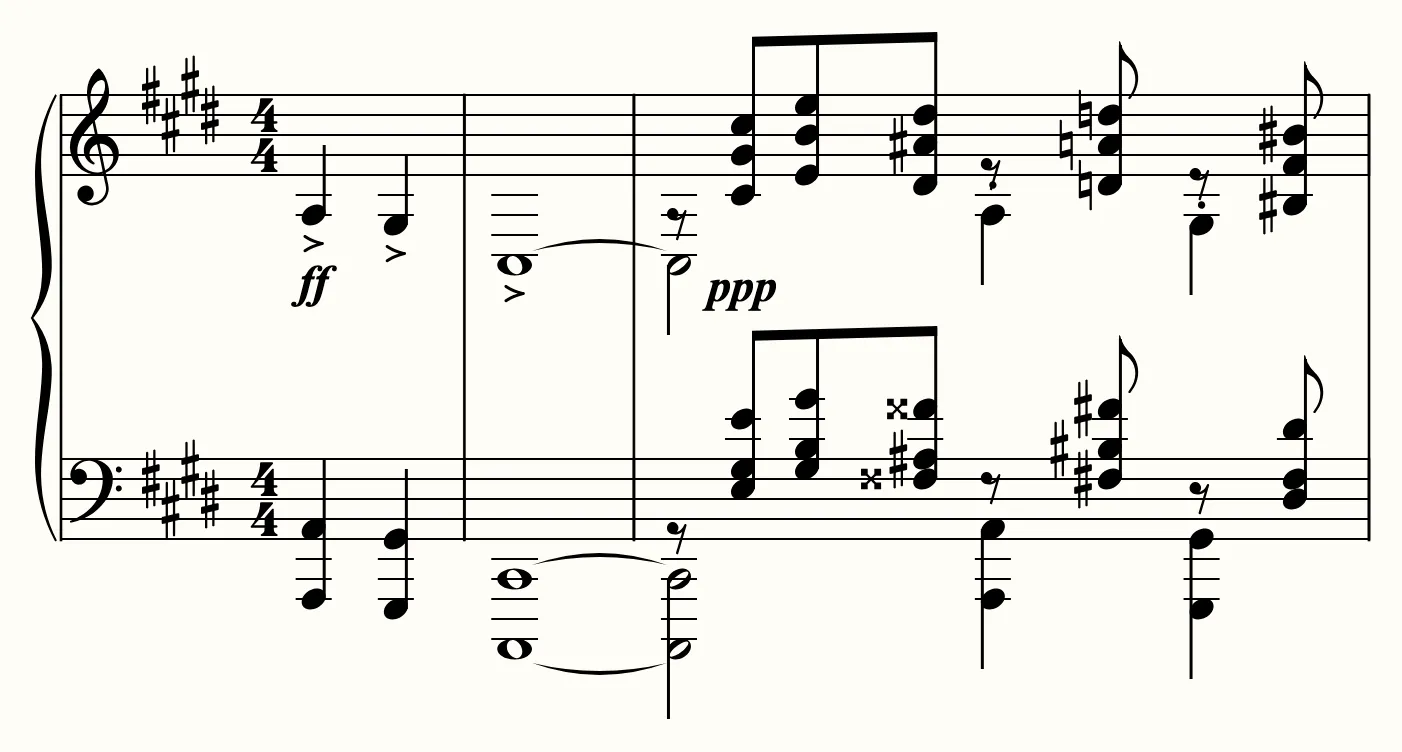
How it links: Tchaikovsky (1876)
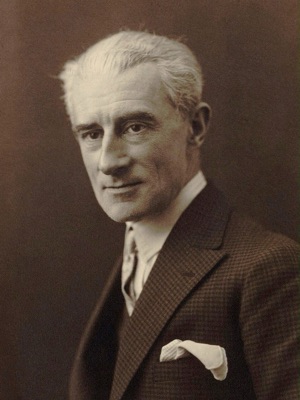
1899 · Maurice Ravel, 1875–1937
Ravel
A dance for a princess who never was
In 1899 Maurice Ravel, still a student, wrote a Pavane for a dead princess: a slow, stately dance, like a painting from an old Spanish court. He admitted he chose the title simply because he liked the sound of the words. Ravel was the son of an engineer, and as precise as a watchmaker; every note in his music is placed exactly. In his last years an illness slowly took away his ability to write music down. It is said that once, hearing his Pavane played, he asked who had written something so beautiful.
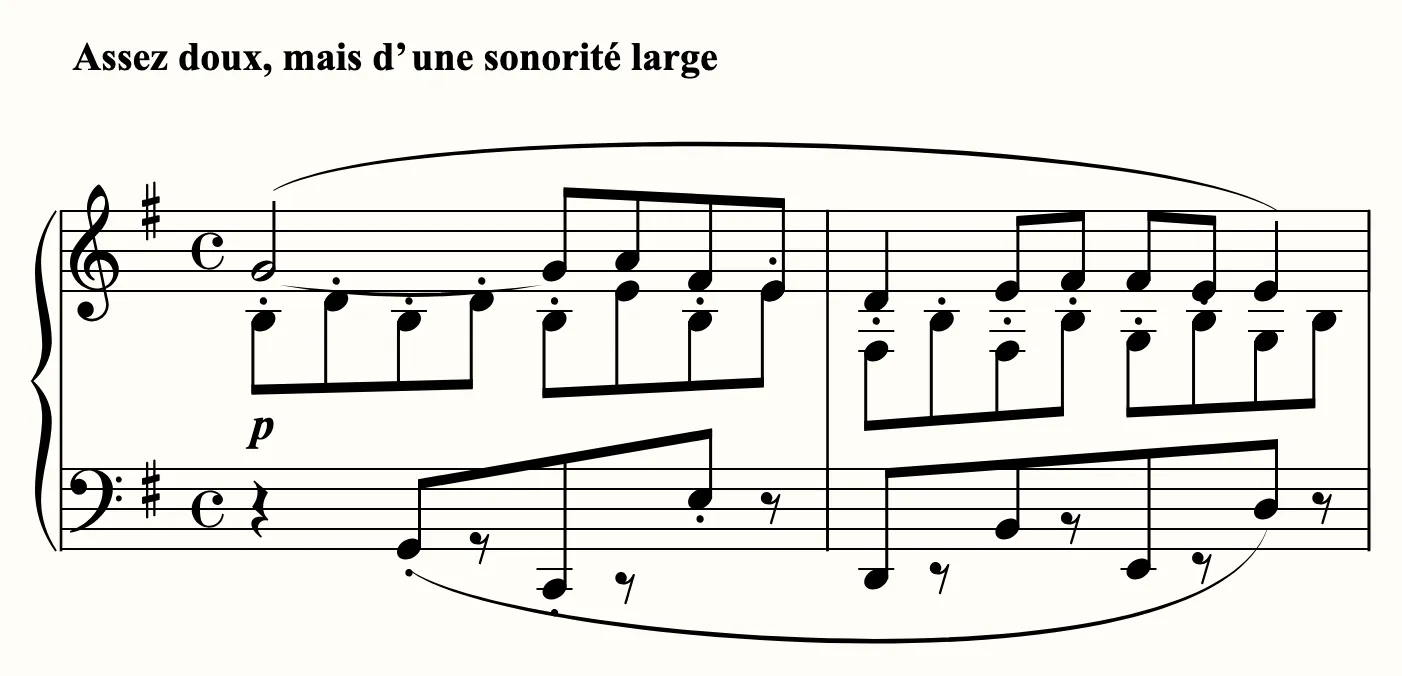
How it links: Gershwin (1924)
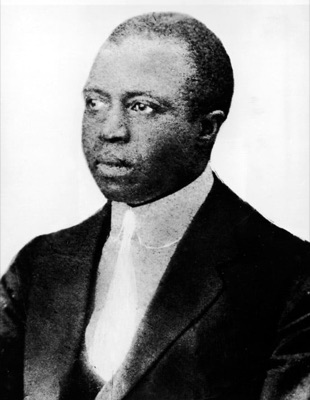
1899 · Scott Joplin, 1868–1917
Joplin
The King of Ragtime
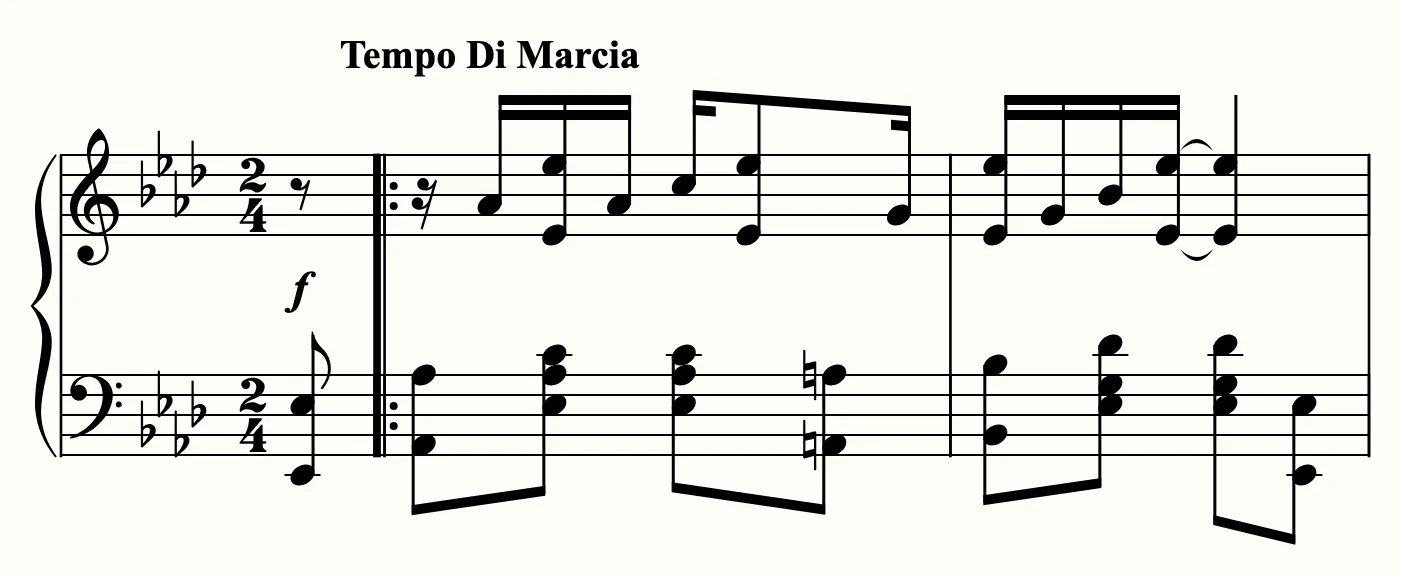
Scott Joplin was the son of a man born into slavery in the American South. As a boy he practised on the pianos in houses where his mother cleaned, then travelled as a musician through the saloons and dance halls of the Mississippi valley. In 1899 he published the Maple Leaf Rag, named after a club in Sedalia, Missouri. Its left hand marches steadily while the right hand dances off the beat: syncopation. It sold hundreds of thousands of copies, and Joplin earned a cent for each one. He dreamed of being taken seriously and wrote an opera he never saw staged. He died in 1917, almost forgotten. More than fifty years later The Entertainer, in a Hollywood film, made the whole world hum him again.
How it links: Jazz is born (1915)
Test yourself
What did Debussy hear at the Paris World’s Fair of 1889 that changed his music?
- A Javanese gamelan
- A player piano
- An American ragtime band
Show the answer
A Javanese gamelan. A gamelan orchestra from Java: layers of shimmering metal, and chords that float instead of march.
In the app
The story of the piano lives in Artform’s Theory room: twelve chapters on a road through the years, each one read aloud, with the pieces to play and a tick for every part you finish. Free, in the browser.
Hear chapter IX in the app