J.S. Bach: piano pieces ranked easiest to hardest
The easiest J.S. Bach pieces to read come first, from the free sheet music library and graded for reading. After them, all 72 play-along chord charts, ranked by chord speed, harmony and tempo.
The easiest J.S. Bach pieces to read
From the free sheet music library, ordered by how hard each one is to read and play, with the ones people ask for first. Every score plays back at any speed and prints.
- Minuet in GEarly intermediate
- Invention No. 8 in F major, BWV 779First year
- Musette in D (BWV Anh. 126)First year
- Jesu, Joy of Man's DesiringFirst year
- Duetto No. 2 in F major, BWV 803First year
- Minuet in A minor, BWV Anh. 120First year
All the easy J.S. Bach sheet music · All 372 J.S. Bach scores
Play along with the chords: all 72, easiest first
- 1.Jesu, Joy of Man's Desiring — Beginner, G major, 60 BPM
- 2.Table of J.S. 's Ornaments - edited by Franklin — Beginner, C major, 60 BPM
- 3.J.S. Partita No.3 1. Fantasia BWV 827 — Beginner, A minor, 63 BPM
- 4.Invention No 4 in D minor BWV 775 — Beginner, D minor, 67 BPM
- 5.Little Prelude in D minor BWV 935 — Beginner, D minor, 67 BPM
- 6.Minuet in G major (BWV Anh.114) — Beginner, G major, 96 BPM
- 7.Minuet in F — Beginner, F major, 100 BPM
- 8.Musette in D — Beginner, D major, 100 BPM
- 9.Minuet in G major (BWV Anh. 114) — Beginner, G major, 100 BPM
- 10.Aria (Notebook for Anna Magdalena) — Beginner, D minor, 100 BPM
- 11.Minuet in F major (BWV Anh. 113) — Beginner, F major, 100 BPM
- 12.Musette in D (BWV Anh. 126) — Beginner, D major, 100 BPM
- 13.Minuet in d Minor (BWV Anh. 132) — Beginner, D minor, 100 BPM
- 14.Prelude in C minor - BWV 999 — Beginner, C minor, 100 BPM
- 15.Minuet — Beginner, G minor, 100 BPM
- 16.Pr\aludium — Beginner, G minor, 100 BPM
- 17.Praeludium 2 — Beginner, D minor, 100 BPM
- 18.Menuet (BWV ANh.132) — Beginner, D minor, 100 BPM
- 19.Minueto de Violão — Beginner, G major, 100 BPM
- 20.Gavotte en Rondo from Partita E major for Violin - B — Beginner, E major, 105 BPM
- 21.Ich steh an Deiner Krippen hier — Beginner, A minor, 110 BPM
- 22.J.S. Partita No.3 6. Scherzo — Beginner, A minor, 126 BPM
- 23.Little Prelude Number 2 in C Minor - BWV 934 — Beginner, C minor, 144 BPM
- 24.March in D Major (BWV Anh. 122) — Beginner, D major, 144 BPM
- 25.Minuets in G Mjor nd G Minor — Beginner, G major, 150 BPM
- 26.Johann Sebastian - Praeludium 1 in C Dur - BWV — Intermediate, C major, 65 BPM
- 27.Air on the G String — Intermediate, G major, 66 BPM
- 28.Prelude in C — Intermediate, C major, 72 BPM
- 29.Toccata in D — Intermediate, D minor, 72 BPM
- 30.Little Prelude in C (924) — Intermediate, C major, 82 BPM
- 31.J. S. : Little Prelude in C Major BWV 924 — Intermediate, C major, 82 BPM
- 32.Prelude BWV 1006 — Intermediate, C major, 84 BPM
- 33.02- Polonaise in G minor C.P.E. — Intermediate, G minor, 90 BPM
- 34.Rondo Espressivo by — Intermediate, B minor, 92 BPM
- 35.Violin Concerto in A minor BWV 1041 — Intermediate, A minor, 100 BPM
- 36.Prelude from first Cello Suite — Intermediate, D major, 100 BPM
- 37.Allemande BWV 836 — Intermediate, G minor, 100 BPM
- 38.Das Wohltemperierte Klavier I - Praeludium in C-Dur — Intermediate, C major, 100 BPM
- 39.Wachet auf ruft uns die Stimme (Sleepers Awake! A Vo — Intermediate, Eb major, 100 BPM
- 40.Sinfonia No. 5 in E flat Major (3-part Inv — Intermediate, Eb major, 100 BPM
- 41.Preludio I — Intermediate, C major, 100 BPM
- 42.O morning star how fair and bright - Philipp Nicolai — Intermediate, D major, 108 BPM
- 43.C.P.E.: Solfeggietto - H.220 — Intermediate, C minor, 125 BPM
- 44.Minuet in G — Intermediate, G major, 126 BPM
- 45.Solfeggietto in C minor — Intermediate, C minor, 130 BPM
- 46.Little Prelude in C minor — Intermediate, C minor, 144 BPM
- 47.Prelude in C minor (WTC I) — Intermediate, C minor, 145 BPM
- 48.J.S. - Toccata & Fugue in D minor BWV 565 — Advanced, D minor, 22 BPM
- 49.J.S. Choralvorspiel ''Nun komm' der Heiden Heil — Advanced, C minor, 35 BPM
- 50.JS - Sinfonia Pastorale (BWV 248 no. 10) Arrang — Advanced, G major, 49 BPM
- 51.J.S. Choralvorspiel Ich ruf' zu dir Herr BWV 63 — Advanced, F minor, 50 BPM
- 52.DUETTO No. 3 BWV 804. — Advanced, G major, 51 BPM
- 53.Johann Sebastian - Französische Suite Nr 1 - 1 — Advanced, D minor, 58 BPM
- 54.Invention No 2 in C minor BWV 773 — Advanced, C minor, 60 BPM
- 55.Fugue in C-Major (from Toccata Adagio and Fugue — Advanced, C major, 61 BPM
- 56.Prelude and Fugue in D-Major BWV 532 (Piano sol — Advanced, D major, 72 BPM
- 57.J. S. - Invention No. 15 in B-minor BWV 786 (re — Advanced, B minor, 75 BPM
- 58.J. S. : Prelude and Fugue in C Minor BWV 549 — Advanced, C minor, 75 BPM
- 59.Double Violin Concerto for Piano — Advanced, D minor, 80 BPM
- 60.Inventio 1 C Major BWV 772 — Advanced, C major, 80 BPM
- 61.Invention No. 5 in Eb-Major BWV 776 (re — Advanced, Eb major, 88 BPM
- 62.Prelude and Fugue 1 - OpenWTC — Advanced, C major, 88 BPM
- 63.Invention No. 13 in A minor — Advanced, A minor, 90 BPM
- 64.Sinfonia No. 3 in D Major (3-part Inventio — Advanced, D major, 92 BPM
- 65.Fugue in G Minor BWV 542 (Piano solo) — Advanced, G minor, 92 BPM
- 66.Prelude (BWV 855a) — Advanced, E minor, 100 BPM
- 67.G Minor — Advanced, G minor, 100 BPM
- 68.Fugue in E Minor BWV 914 By — Advanced, E minor, 100 BPM
- 69.BWV 974 - Adagio — Advanced, D minor, 100 BPM
- 70.Break forth o beauteous heavenly light - Johann Scho — Advanced, C minor, 110 BPM
- 71.J.S. Nun freut euch lieben Christen Arrt F. Bus — Advanced, G major, 120 BPM
- 72.BWV 807: The English Suites II Prelude — Advanced, A minor, 136 BPM
J.S. Bach in the story of the piano
Parts of the history of the piano, the story told in twelve short chapters, from the oldest keyboard music to today. Press Listen to hear it read aloud.
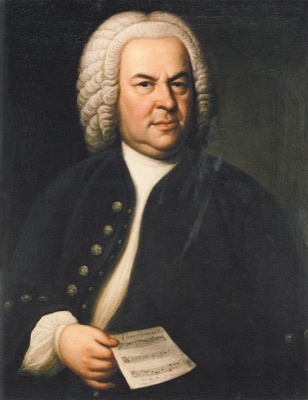
1722 · Johann Sebastian Bach, 1685–1750
Bach, in every key
Twenty-four keys, and a family to feed
Johann Sebastian Bach was orphaned at nine and raised by his older brother. In 1720, while he was away travelling with his prince, his wife Maria Barbara fell ill and died; he came home to find her already buried. He was left with four young children. Two years later he finished a book of preludes and fugues, one in every major and minor key, for the use and profit of young musicians. He called it The Well-Tempered Clavier. Clavier simply means keyboard. Well-tempered means tuned so that every key sounds good, something keyboards could not take for granted. The first prelude, in C major, is one pattern of broken chords, rising and falling like breathing. It is one of the first pieces nearly every pianist learns, and Bach wrote it for the harpsichord and the clavichord.
From chapter II of the story of the piano: Soft and loud, 1700–1747
1747 · Johann Sebastian Bach, 1685–1750
Bach and the king
An old man, a young king, and a theme
Silbermann showed one of his first pianos to Bach in the 1730s. Bach praised the tone, but said the keys were too heavy and the top notes too weak. Silbermann was offended, and went back to work for years. In May 1747, Bach, now sixty-two, travelled to Potsdam to visit his son Carl Philipp Emanuel, who played for Frederick the Great. The king owned several of Silbermann's improved pianos. He led Bach from one to the next, then played him a theme and asked for a fugue on it. Bach improvised one on the spot. At home he wrote it all down and sent it to the king as The Musical Offering. The story goes that this time, Bach approved of the pianos.
From chapter II of the story of the piano: Soft and loud, 1700–1747