Schumann: piano pieces ranked easiest to hardest
The easiest Schumann pieces to read come first, from the free sheet music library and graded for reading. After them, all 25 play-along chord charts, ranked by chord speed, harmony and tempo.
The easiest Schumann pieces to read
From the free sheet music library, ordered by how hard each one is to read and play, with the ones people ask for first. Every score plays back at any speed and prints.
- Kinderszenen, Op. 15 No. 7: TräumereiIntermediate
- Soldier's March Op. 68 No. 2First year
- Album for the Young, Op. 68 No. 36: Italian Mariners' SongEarly intermediate
- Album for the Young, Op. 68 No. 1: MelodyEarly intermediate
- Album for the Young, Op. 68 No. 5: Little Piece (Stückchen)Early intermediate
- Kinderszenen, Op. 15 No. 2: Kuriose GeschichteEarly intermediate
All the easy Schumann sheet music · All 154 Schumann scores
Play along with the chords: all 25, easiest first
- 1.Op. 12 No. 1 Des Abends — Beginner, C# major, 35 BPM
- 2.The Poor Orphan (Album for the Young, Op. 68 No. 6) — Beginner, A minor, 46 BPM
- 3.Wild Rider — Beginner, A minor, 67 BPM
- 4.Sicilienne (Album for the Young, Op. 68 No. 11) — Beginner, A minor, 75 BPM
- 5.The Wild Horseman — Beginner, A minor, 80 BPM
- 6.The Wild Horseman Op. 68 No. 8 — Beginner, A minor, 80 BPM
- 7.First Loss (Album for the Young, Op. 68 No. 16) — Beginner, E minor, 92 BPM
- 8.Little Study (Album for the Young, Op. 68 No. 14) — Beginner, G major, 95 BPM
- 9.The Happy Farmer — Beginner, F major, 100 BPM
- 10.Album for the Young Op. 68 No. A Hymn-T — Beginner, G major, 100 BPM
- 11.Robert--Album-fuer-die-Jugend-Nr-35-Mignon — Beginner, Eb major, 100 BPM
- 12.Soldier's March Op. 68 No. 2 — Beginner, G major, 120 BPM
- 13.Knecht Ruprecht (Album for the Young, Op. 68 No. 12) — Beginner, A minor, 126 BPM
- 14.Album for the Young Op. 68 No. Song of S — Intermediate, E major, 56 BPM
- 15.Dreamng - Träumere — Intermediate, F major, 60 BPM
- 16.Kinderszenen Op. 15 — Intermediate, A minor, 68 BPM
- 17.May, Lovely May (Album for the Young, Op. 68 No. 13) — Intermediate, E major, 71 BPM
- 18.Sicilienne (Album Op. 68) — Intermediate, A minor, 75 BPM
- 19.Schlummerlied — Intermediate, Eb major, 77 BPM
- 20.Kind im Einschlummern - Kinderszenen No 12 (child fa — Intermediate, E minor, 100 BPM
- 21.The Merry Farmer Op. 68 No. 10 — Intermediate, F major, 120 BPM
- 22.Carnaval - No. 12 Chopin (Piano solo) — Intermediate, Ab major, 152 BPM
- 23.Des Abends — Advanced, Db major, 35 BPM
- 24.Étude after Paganini's 5th Caprice - R. Op. — Advanced, A minor, 110 BPM
- 25.Toccata Op. 7 (Piano solo) — Advanced, C major, 122 BPM
Schumann in the story of the piano
A part of the history of the piano, the story told in twelve short chapters, from the oldest keyboard music to today. Press Listen to hear it read aloud.
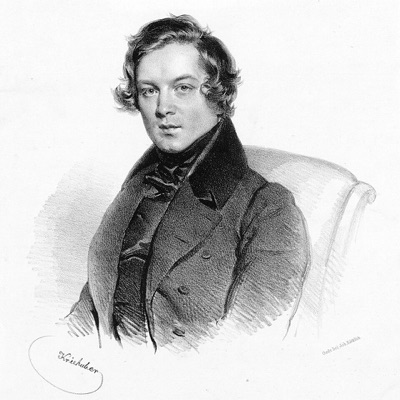
1838 · Robert Schumann, 1810–1856
Robert and Clara
Scenes from childhood
Robert Schumann wanted to be a great pianist until he damaged a finger, perhaps with a device he built to strengthen it. So he wrote instead: music, and words about music. In his first article he greeted the young Chopin with the line, hats off, gentlemen, a genius. He fell in love with Clara Wieck, his teacher's daughter, a prodigy who had published her first pieces at eleven. Her father forbade the marriage, and they fought him in court. In 1838, kept apart and longing, Robert wrote thirteen little Scenes from Childhood. The seventh, Träumerei, dreaming, is one of the gentlest pieces ever written. They married in 1840, and Clara became one of the great pianists of the century.
From chapter VI of the story of the piano: Poets and virtuosos, 1838–1849