Mozart: piano pieces ranked easiest to hardest
The easiest Mozart pieces to read come first, from the free sheet music library and graded for reading. After them, all 43 play-along chord charts, ranked by chord speed, harmony and tempo.
The easiest Mozart pieces to read
From the free sheet music library, ordered by how hard each one is to read and play, with the ones people ask for first. Every score plays back at any speed and prints.
- Allegro in B♭ Major K3First year
- Minuet & Trio - K. 1Early intermediate
- Sonata in C major, K. 545: II. AndanteEarly intermediate
- Abendruhe, K. Anh. C 9.10Early intermediate
- Sonate No. 11 KV 331 Andante graziosoEarly intermediate
- Viennese Sonatina No. 5 in F Major I Adagio K 439bEarly intermediate
All the easy Mozart sheet music · All 100 Mozart scores
Play along with the chords: all 43, easiest first
- 1.Rondo in F K. 15hh — Beginner, F major, 55 BPM
- 2.Allegro 10 — Beginner, G major, 60 BPM
- 3.Komm lieber Mai — Beginner, F major, 64 BPM
- 4.'s Musical Dice Game — Beginner, C major, 67 BPM
- 5.Musikalisches Würfelspiel K.516f — Beginner, C major, 67 BPM
- 6.Minore in A minor K. 15k — Beginner, A minor, 100 BPM
- 7.Wolfgang Amadeus - Morgen kommt der Weihnacht — Beginner, C major, 100 BPM
- 8.Minuet in D Major K94/73h by — Beginner, D major, 100 BPM
- 9.Sonata No. 16 K 545 3rd Movement — Beginner, C major, 104 BPM
- 10.Minuet in G K. 15c — Beginner, G major, 106 BPM
- 11.Allegro in Bâ Major K3. — Beginner, Bb major, 110 BPM
- 12.Minuet in F, K. 5 — Beginner, F major, 120 BPM
- 13.Minuet in F Major K5. — Beginner, F major, 120 BPM
- 14.German Dance No.3 KV 605 - Piano Solo — Beginner, C major, 120 BPM
- 15.Török induló — Beginner, A minor, 120 BPM
- 16.Arie des Papageno — Beginner, G major, 140 BPM
- 17.Sonata in Bb K 570 Movement I — Beginner, Bb major, 144 BPM
- 18.Contredanse in A K. 15l — Beginner, A minor, 150 BPM
- 19.Minuet in C Major K1f. — Beginner, C major, 150 BPM
- 20.Klaviersonate KV 457 - 1 expozice — Beginner, Eb major, 168 BPM
- 21.Minuet & Trio - K. 1 — Beginner, G major, 180 BPM
- 22.Minuet in G Major K1e. — Beginner, G major, 200 BPM
- 23.Fantasy in D minor K397 — Intermediate, D minor, 50 BPM
- 24.Viennese Sonatina No 5 in F Major I Adagio K 439b — Intermediate, F major, 60 BPM
- 25.Sonate No. 11 KV 331 Andante grazioso — Intermediate, A major, 67 BPM
- 26.Piano Sonata No. 10 in C major- 3rd Movement — Intermediate, C major, 80 BPM
- 27.Piano Sonata No. 18 in D: Allegro — Intermediate, D major, 84 BPM
- 28.Sonate in C KV 330-1.Allegro moderato — Intermediate, C major, 85 BPM
- 29.Polonaise W.A. — Intermediate, F major, 90 BPM
- 30.Polonaise — Intermediate, F major, 90 BPM
- 31.Donne mie la fate a tanti (piano-vocal score) — Intermediate, G major, 90 BPM
- 32.Flute Quartet in D For Flute and Piano K285 — Intermediate, D major, 110 BPM
- 33.Sonata no 16 in C Major — Intermediate, C major, 120 BPM
- 34.Piano Sonata No. 1 in C K. 279 (189d) — Intermediate, C major, 120 BPM
- 35.Piano Sonata No. 16 - Allegro — Intermediate, C major, 132 BPM
- 36.sonate n7 C M — Intermediate, C major, 144 BPM
- 37.Allegro Molto in C Major — Intermediate, C major, 144 BPM
- 38.W.A. - Fantasia in C minor KV.475 — Advanced, C minor, 40 BPM
- 39.Lacrimosa (Requiem) — Advanced, D minor, 43 BPM
- 40.Andante — Advanced, C major, 52 BPM
- 41.flute concerto no.1 in G major kv131 — Advanced, G major, 116 BPM
- 42.Sonata No.8 KV.310 1st — Advanced, A minor, 117 BPM
- 43.Serenade No.13 in G Major Eine Kleine Nachtmusik KV. — Advanced, G major, 144 BPM
Mozart in the story of the piano
Parts of the history of the piano, the story told in twelve short chapters, from the oldest keyboard music to today. Press Listen to hear it read aloud.
1768
A piano for every home
A piano on the kitchen table
When war swept through Saxony in the 1750s, German instrument makers fled to London. One of them, Johannes Zumpe, began making small, cheap pianos shaped like a box on legs: the square piano. Suddenly families who could never afford a harpsichord could own a keyboard. In 1768, Johann Christian Bach, the youngest son of Sebastian, now music master to the Queen of England, played a solo on one at a public concert, one of the first times London heard the piano on its own. A few years earlier he had befriended a visiting eight-year-old called Mozart. They played a sonata together, the little boy on his knee, taking turns bar by bar. Mozart loved him all his life.
From chapter III of the story of the piano: The new keyboard of Europe, 1753–1795
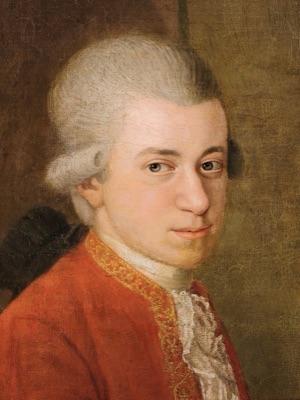
1777 · Wolfgang Amadeus Mozart, 1756–1791
Mozart meets Stein
A letter to his father
In October 1777, Wolfgang Amadeus Mozart, twenty-one and looking for work, stopped in Augsburg and tried the pianos of Johann Andreas Stein. He wrote to his father in delight: however hard he struck, the hammer fell away at once, nothing jangled, and the tone stopped the instant he lifted his finger. This was the Viennese piano: light, quick and clear, perfect for music where every note speaks like a word. But that journey would break his heart. His mother, travelling with him, fell ill in Paris the next summer and died there, far from home. Mozart had to break the news to his father.
From chapter III of the story of the piano: The new keyboard of Europe, 1753–1795
1781
The duel
Christmas Eve, 1781
On Christmas Eve 1781, the Emperor Joseph the Second staged a contest in his palace in Vienna: Mozart against Muzio Clementi, an Italian virtuoso who lived in London. They improvised, played their own sonatas, and read music together at sight. The Emperor is said to have called it a draw. Mozart wrote to his father that Clementi was a mere mechanic, with no taste or feeling. Clementi was kinder. He said he had never heard anyone play with so much spirit and grace. Clementi went on to become a great teacher and a maker of pianos in London, and his Sonatinas are still among the first real pieces a pianist learns.
From chapter III of the story of the piano: The new keyboard of Europe, 1753–1795
1783 · Wolfgang Amadeus Mozart, 1756–1791
Mozart’s Vienna
A piano carried through the streets
Mozart settled in Vienna, married Constanze against his father's wishes, and lived as a freelance musician, one of the first great composers to try. He bought a fine piano by Anton Walter and had it carried through the streets to his concerts. Around 1783 he wrote a sonata that ends with a march in the Turkish style, imitating the drums and cymbals of the Ottoman military bands that fascinated Vienna. Five years later, short of money, he wrote a little sonata in C and listed it as for beginners. It is now one of the most played pieces in the world. He died in 1791, aged thirty-five, with his Requiem unfinished on his desk.
From chapter III of the story of the piano: The new keyboard of Europe, 1753–1795