Brahms: piano pieces ranked easiest to hardest
The easiest Brahms pieces to read come first, from the free sheet music library and graded for reading. After them, all 14 play-along chord charts, ranked by chord speed, harmony and tempo.
The easiest Brahms pieces to read
From the free sheet music library, ordered by how hard each one is to read and play. Every score plays back at any speed and prints.
- 51 Übungen für Klavier No. 1aFirst year
- Happy bithday lullaby MinuetFirst year
- 8 Lieder und Gesänge Op. 58 No. 8 - SerenadeFirst year
- In stiller Nacht, WoO 34 No. 8Early intermediate
- BerceuseEarly intermediate
- Vergangen ist mir Glück und HeilEarly intermediate
Play along with the chords: all 14, easiest first
- 1.Happy bithday lullaby Minuet — Beginner, C major, 100 BPM
- 2.Ballade Op 10 No 3 - Intermezzo — Beginner, F# major, 100 BPM
- 3.ââSandmännchen — Intermediate, G major, 84 BPM
- 4.Ballade Op 10 No 2 — Intermediate, D major, 92 BPM
- 5.Intermezzo Op. 118 No. — Intermediate, A major, 92 BPM
- 6.Intermezzo, Op. 116 No. 2 — Intermediate, A minor, 92 BPM
- 7.Erlaube mir feins Mädchen (SATB) — Intermediate, F major, 100 BPM
- 8.Wie Melodien zieht es mir — Intermediate, A major, 100 BPM
- 9.Intermezzo in Bb — Intermediate, Eb minor, 100 BPM
- 10.Waltz Op. 39 No. 15 — Intermediate, Ab major, 116 BPM
- 11.B minor Rhapsody 1 Op. 79 — Intermediate, B minor, 120 BPM
- 12.Hungarian Dance No. 1 — Intermediate, G minor, 140 BPM
- 13.Ballade Op 10 No 1 — Advanced, D minor, 92 BPM
- 14.51 Übungen für Klavier No. 1a — Advanced, D major, 100 BPM
Brahms in the story of the piano
A part of the history of the piano, the story told in twelve short chapters, from the oldest keyboard music to today. Press Listen to hear it read aloud.
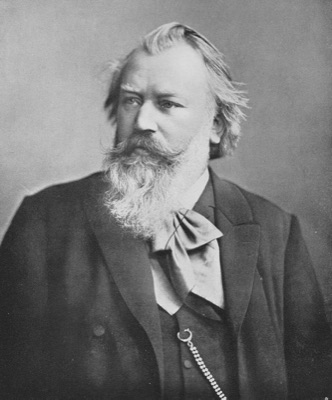
1868 · Johannes Brahms, 1833–1897
Brahms
A love that stayed unspoken
At twenty, Johannes Brahms knocked on Robert and Clara Schumann's door. Robert told the world a young genius had arrived. Months later Robert fell gravely ill in his mind and was taken to a hospital he never left, and Brahms moved nearby to help Clara and her young children. He loved her for the rest of his life. We will never know exactly what passed between them, only that they stayed devoted friends for forty years. His Lullaby, written for a friend's new baby, is sung everywhere. His late piano pieces, written in his sixties, feel like private letters; he called some of them the lullabies of his sorrows. When Clara died in 1896, Brahms rushed to her funeral. He died less than a year later.
From chapter VIII of the story of the piano: Voices of the nations, 1867–1894