Erik Satie: piano pieces ranked easiest to hardest
The easiest Erik Satie pieces to read come first, from the free sheet music library and graded for reading. After them, all 14 play-along chord charts, ranked by chord speed, harmony and tempo.
The easiest Erik Satie pieces to read
From the free sheet music library, ordered by how hard each one is to read and play, with the ones people ask for first. Every score plays back at any speed and prints.
- Gymnopédie No. 1Intermediate
- Enfantillages pittoresques: III. Marche du grand escalierFirst year
- Enfantillages pittoresques: II. BerceuseFirst year
- Enfantillages pittoresques: I. Petit prélude à la journéeFirst year
- Valses Distinguees (No. 2 Son Binocle)First year
- Gnossienne n1Early intermediate
All the easy Erik Satie sheet music · All 38 Erik Satie scores
Play along with the chords: all 14, easiest first
- 1.Gymnopédie No. 1 — Beginner, D major, 54 BPM
- 2.Gymnopédie No. 1 by transposed to C arranged f — Beginner, C major, 54 BPM
- 3.Gnossienne No.3 — Beginner, A minor, 60 BPM
- 4.Troisième Gymnopèdie — Beginner, A minor, 63 BPM
- 5.jose juan 09B — Beginner, D major, 64 BPM
- 6.3ème Gymnopédie — Beginner, A minor, 66 BPM
- 7.Caresse - Erik — Beginner, C major, 71 BPM
- 8.Gymnopedie No. 1 - single page - - 1888 — Beginner, D major, 80 BPM
- 9.Gnossienne n1 — Beginner, A minor, 85 BPM
- 10.Enfantillages Pittoresques - Berceuse — Beginner, C major, 100 BPM
- 11.Le Fils Des Étoiles - Erik - solo piano — Intermediate, D major, 80 BPM
- 12.Four Ogives (Erik ) — Advanced, A minor, 44 BPM
- 13.Peio 09.2 — Advanced, F minor, 102 BPM
- 14.Cati 09 2 — Advanced, F minor, 102 BPM
Erik Satie in the story of the piano
A part of the history of the piano, the story told in twelve short chapters, from the oldest keyboard music to today. Press Listen to hear it read aloud.
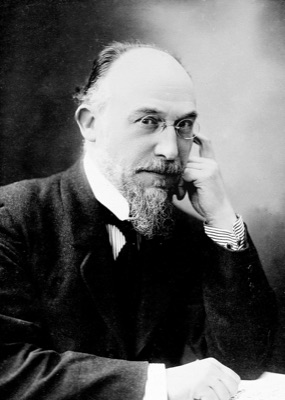
1888 · Erik Satie, 1866–1925
Satie
The outsider of Montmartre
Erik Satie played the piano in the cabarets of Montmartre for a living, later wore seven identical grey velvet suits, and wrote jokes into his music, with instructions to the player that make no sense at all. In 1888, at twenty-one, he wrote three Gymnopédies: slow, plain, strange pieces, a melody drifting over two swaying chords. In an age of enormous, dramatic music, they were almost nothing, and almost nobody noticed. He died poor in 1925. In his room, which no one else had entered for years, his friends found two pianos stacked one on top of the other, and a pile of letters he had never opened. Today the first Gymnopédie is one of the most played piano pieces on earth.
From chapter IX of the story of the piano: A new colour, 1888–1899