Mendelssohn: piano pieces ranked easiest to hardest
The easiest Mendelssohn pieces to read come first, from the free sheet music library and graded for reading. After them, all 10 play-along chord charts, ranked by chord speed, harmony and tempo.
The easiest Mendelssohn pieces to read
From the free sheet music library, ordered by how hard each one is to read and play. Every score plays back at any speed and prints.
- Es ist bestimmt in Gottes Rat (Gottes Rat und Scheiden), Op. 47 No. 4Early intermediate
- Paulus (St. Paul), Op. 36: No. 3, Chorale: Allein Gott in der Höh sei EhrEarly intermediate
- Paulus (St. Paul), Op. 36: No. 9, Chorale: Dir, Herr, dir will ich mich ergebenEarly intermediate
- Elijah, Op. 70: No. 32, Chorus: Wer bis an das Ende beharrtIntermediate
- Prelude and Fugue in D minor, Op. 37 No. 3: II. FugueIntermediate
- Organ Sonata No. 6 in D minor, Op. 65: III. FinaleIntermediate
Play along with the chords: all 10, easiest first
- 1.Venetian Gondola Song No. 6 op. 19 — Intermediate, G minor, 37 BPM
- 2.Mendelsshon Songs Without Words (No. 6) Piano solo — Intermediate, G minor, 44 BPM
- 3.Op.62 No5 — Intermediate, A minor, 61 BPM
- 4.Hark! The Herald Angels Sing(åããæããèããæå) - Felix Me — Intermediate, C major, 116 BPM
- 5.Lied ohne Worte — Intermediate, C major, 126 BPM
- 6.Violin Conceto in E Minor For Piano — Intermediate, E minor, 130 BPM
- 7.Scherzo In E Minor Felix — Advanced, E minor, 60 BPM
- 8.F. Sechs Lieder ohne Worte Andante con m — Advanced, E major, 82 BPM
- 9.Songs without Words No.7 Op.30 No.1 — Advanced, Eb major, 92 BPM
- 10.Songs Without Words (No. 3) Piano solo — Advanced, A major, 117 BPM
Mendelssohn in the story of the piano
A part of the history of the piano, the story told in twelve short chapters, from the oldest keyboard music to today. Press Listen to hear it read aloud.
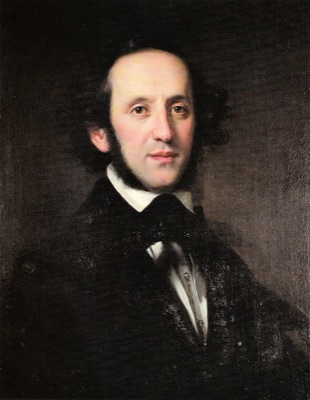
1829 · Felix Mendelssohn, 1809–1847
Felix and Fanny
A brother, a sister, and Bach brought back
Felix Mendelssohn and his older sister Fanny were the two most gifted children of a wealthy Berlin family, and they adored each other. Both composed from childhood, but their father told Fanny that music could only ever be an ornament in her life, never a career. Some of her songs were even published under Felix's name. In 1829, at twenty, Felix conducted Bach's Saint Matthew Passion, which had not been heard for a century, and started the revival that put Bach back into every pianist's hands. Then he published his Songs Without Words, melodies that sing with no words at all. When Fanny died suddenly in 1847, Felix was heartbroken. He died six months later.
From chapter V of the story of the piano: The singing piano, 1812–1832